
How does an ultrasound examination work?
Internal organs can be visualized with an ultrasound examination. The procedure helps to diagnose various diseases. The technical term for an ultrasound examination is sonography. Ultrasound waves travel through the tissue without damaging it. In contrast to X-ray examinations, ultrasound does not involve any radiation exposure.
How does the procedure work?
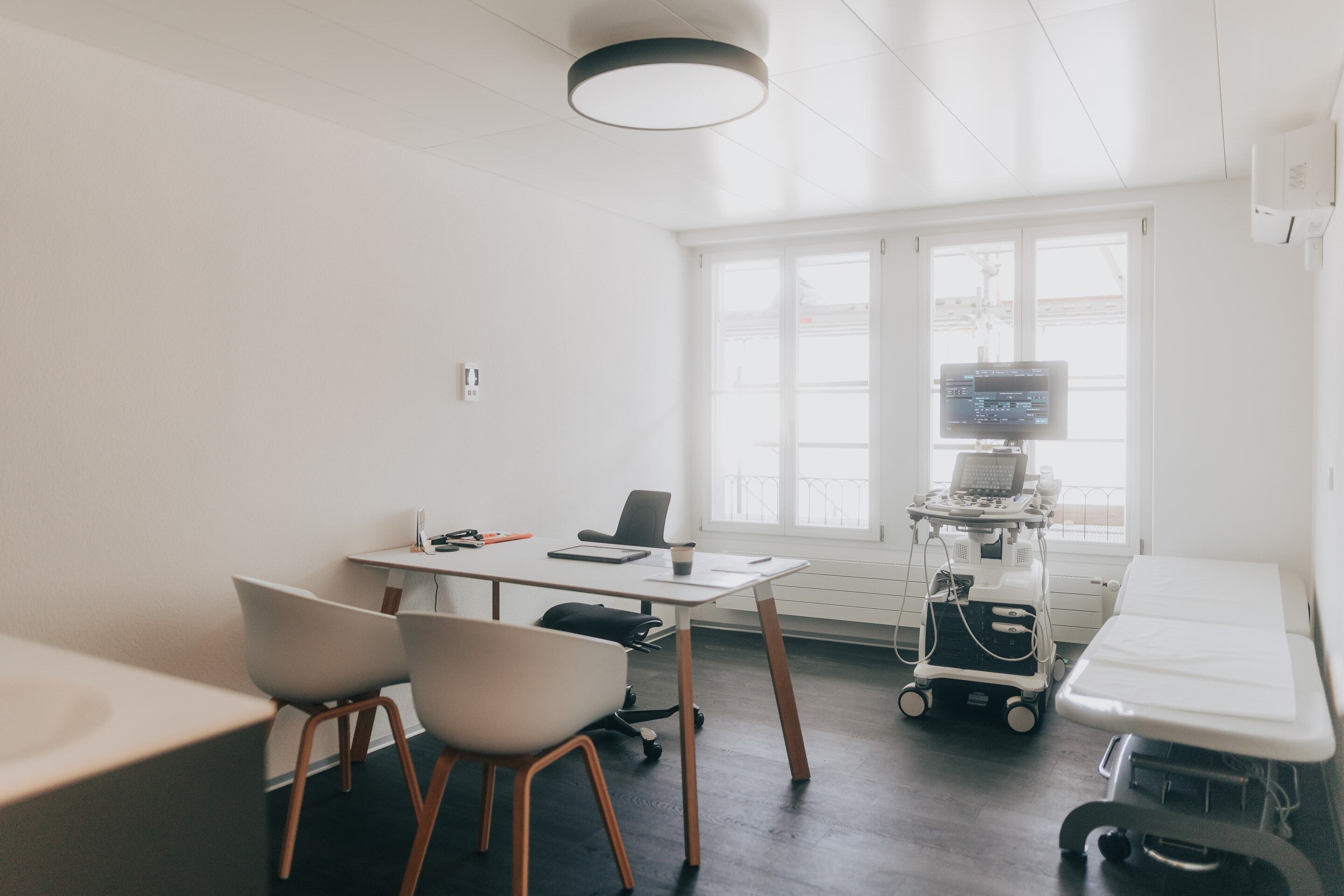
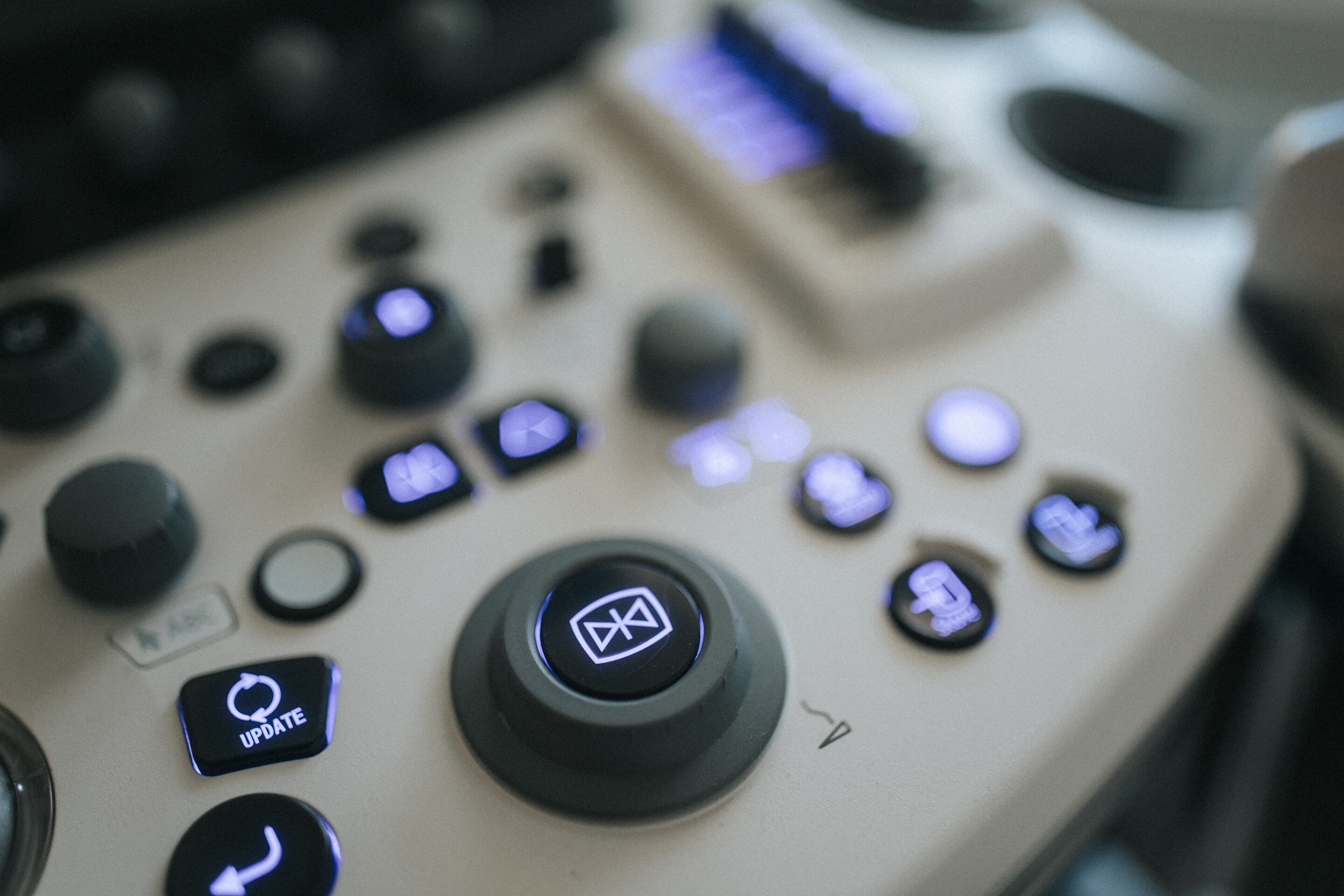
An ultrasound device is required for the examination. It usually looks like a cabinet on wheels with a computer-like device and screen. a hand-held device, the so-called transducer, is connected via a cable and contains special crystals. When the ultrasound device is switched on, the transducer - similar to a loudspeaker - emits sound waves that are inaudible to the human ear. When the transducer is placed on the skin, the ultrasound waves travel into the body. From there, they are reflected back from the tissues and organs like an echo.
Different tissues reflect ultrasound waves to different degrees. A computer derives the position, shape and structure of the organs from these echoes. This is visualized on the connected monitor as an ultrasound image. Examination findings and individual images can be saved and printed out.
Certain ultrasound devices can also determine the direction and speed at which the blood flows through the blood vessels or the heart. This is called a Doppler examination.
Is preparation necessary?
You do not normally need to prepare for an ultrasound examination. If you do, you will be informed of this by the doctor: To be able to see the bladder well, for example, it is helpful if it is slightly full. You will therefore be asked not to go to the toilet immediately before the examination. If the bowel and neighboring organs are to be examined more closely, air and chyme can interfere with the ultrasound image. It may therefore be necessary to appear for an ultrasound examination of the abdomen on an empty stomach.
How does the examination work?
You usually lie on your back on a couch for the examination. Depending on what is to be examined, it is sometimes necessary to adopt special positions - for example, turning onto your side so that the heart or kidneys can be examined properly. For an examination of the neck, a small pillow or roll is placed on the neck to stretch the head slightly.
What happens during the examination?
The doctor first applies a colorless gel to the transducer or the part of the body to be examined. The gel ensures that the ultrasound probe has good contact with the skin. He or she then presses the transducer onto the skin and moves it back and forth. This is usually painless, but may cause some discomfort. Sometimes you have to hold your breath briefly during the examination so that the doctor can save a sharp image.
Ultrasound examinations take different lengths of time. They can be over after a few minutes, but sometimes a little more than half an hour is required - depending on which and how many organs are being examined.
Which areas of the body are examined?
Almost the entire body can be examined by ultrasound:
- On the head and neck, the thyroid gland or blood vessels are usually examined.
- On the chest, the main focus is on the heart (so-called heart echo).
- However, the peripheral area of the lungs can also be examined - further in, the air present disturbs the image quality. However, changes in the inner areas of the lungs can be easily detected by X-ray examinations, for example.
- The ultrasound examination of the abdomen is often called abdominal sonography. This examines organs such as the liver and gallbladder, pancreas and spleen.
- The kidneys can be assessed well from the side.
- The stomach and intestines can also be examined by ultrasound. However, air and chyme often mean that they are not fully visible. However, these organs can be assessed well using gastroscopy or colonoscopy, for example.
- In the abdomen, it is mainly the bladder and the female or male reproductive organs that are examined.
- During pregnancy, ultrasound makes the unborn child in the uterus visible.
- Blood vessels in the arms and legs in particular are "scanned". Muscles, tendons and joints can also be examined by ultrasound.
What can be detected by ultrasound?
The growth of the unborn child can be checked during an ultrasound scan during pregnancy: The gynecologist can measure how big the child is, whether all organs and limbs are attached and developing well. The placenta (placenta) and umbilical cord, through which the child is supplied with oxygen and nutrients, can also be assessed.
Ultrasound examinations are also carried out to detect diseases or tissue damage, in particular
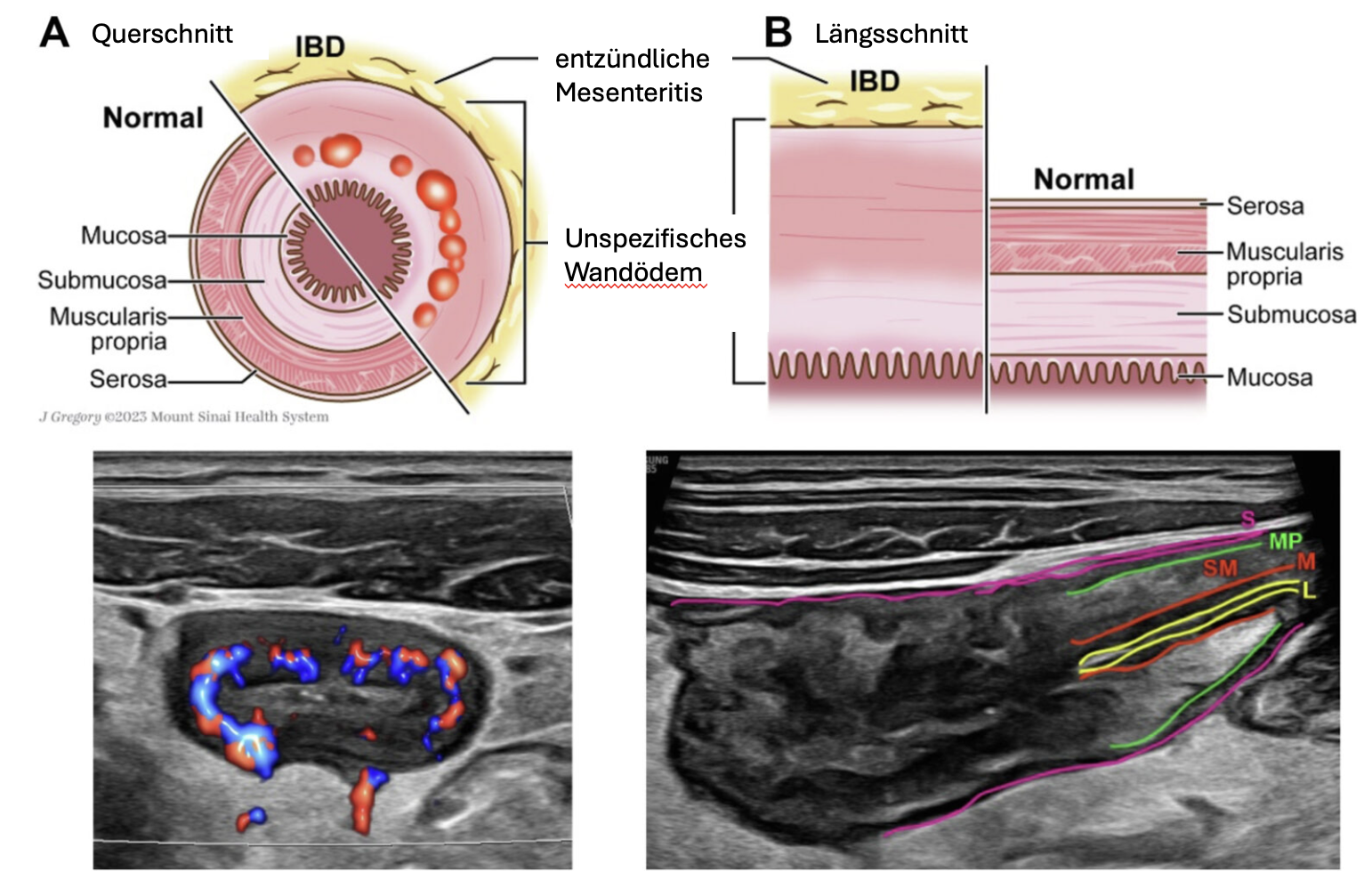
- Swelling of tissues or entire organs, such as the spleen or lymph nodes. Among other things, they can indicate inflammation.
- Protrusions (aneurysms) or constrictions of blood vessels or heart valves.
- Cavities (so-called cysts). They can develop in the kidneys or ovaries, for example.
- Calcifications, for example in the pancreas, or other deposits such as gallstones.
- Accumulations of fluid, for example between the lungs and chest wall (so-called pleural effusion).
- Tissue changes such as fatty liver or liver cirrhosis.
- Changes in the size of organs such as an enlarged thyroid gland (goitre) or shrunken kidneys (shrunken kidneys).
- Growths such as tumors or their metastases.
What is endosonography?
Some organs cannot be seen optimally by ultrasound through the skin. They lie too deep inside the body or are covered by bone. In this case, an extra-slim transducer - also known as an ultrasound probe - can be inserted into a natural opening and the corresponding body region can be examined "from the inside" (Greek: "endo-"): for example, the female reproductive organs can be easily visualized via the vagina and the prostate in men via the anus. Organs in the abdomen or chest can also be examined using endosonography - for example the heart. The transducer is attached to a thin tube, which is inserted into the oesophagus as in a gastroscopy. The heart can be easily seen from there.
a finer catheter can also be used to "sonicate" blood vessels from the inside. However, this requires a small incision to insert the catheter.
Endosonography usually does not require anesthesia. Sometimes you are given sedatives beforehand to make you sleep during the examination.
How does the procedure work?
An ultrasound device is required for the examination. It usually looks like a cabinet on wheels with a computer-like device and screen. a hand-held device, the so-called transducer, is connected via a cable and contains special crystals. When the ultrasound device is switched on, the transducer - similar to a loudspeaker - emits sound waves that are inaudible to the human ear. When the transducer is placed on the skin, the ultrasound waves travel into the body. From there, they are reflected back from the tissues and organs like an echo.
Different tissues reflect ultrasound waves to different degrees. A computer derives the position, shape and structure of the organs from these echoes. This is visualized on the connected monitor as an ultrasound image. Examination findings and individual images can be saved and printed out.
Certain ultrasound devices can also determine the direction and speed at which the blood flows through the blood vessels or the heart. This is called a Doppler examination.
Is preparation necessary?
You do not normally need to prepare for an ultrasound examination. If you do, you will be informed of this by the doctor: To be able to see the bladder well, for example, it is helpful if it is slightly full. You will therefore be asked not to go to the toilet immediately before the examination. If the bowel and neighboring organs are to be examined more closely, air and chyme can interfere with the ultrasound image. It may therefore be necessary to appear for an ultrasound examination of the abdomen on an empty stomach.
How does the examination work?
You usually lie on your back on a couch for the examination. Depending on what is to be examined, it is sometimes necessary to adopt special positions - for example, turning onto your side so that the heart or kidneys can be examined properly. For an examination of the neck, a small pillow or roll is placed on the neck to stretch the head slightly.
What happens during the examination?
The doctor first applies a colorless gel to the transducer or the part of the body to be examined. The gel ensures that the ultrasound probe has good contact with the skin. He or she then presses the transducer onto the skin and moves it back and forth. This is usually painless, but may cause some discomfort. Sometimes you have to hold your breath briefly during the examination so that the doctor can save a sharp image.
Ultrasound examinations take different lengths of time. They can be over after a few minutes, but sometimes a little more than half an hour is required - depending on which and how many organs are being examined.
Which areas of the body are examined?
Almost the entire body can be examined by ultrasound:
- On the head and neck, the thyroid gland or blood vessels are usually examined.
- On the chest, the main focus is on the heart (so-called heart echo).
- However, the peripheral area of the lungs can also be examined - further in, the air present disturbs the image quality. However, changes in the inner areas of the lungs can be easily detected by X-ray examinations, for example.
- The ultrasound examination of the abdomen is often called abdominal sonography. This examines organs such as the liver and gallbladder, pancreas and spleen.
- The kidneys can be assessed well from the side.
- The stomach and intestines can also be examined by ultrasound. However, air and chyme often mean that they are not fully visible. However, these organs can be assessed well using gastroscopy or colonoscopy, for example.
- In the abdomen, it is mainly the bladder and the female or male reproductive organs that are examined.
- During pregnancy, ultrasound makes the unborn child in the uterus visible.
- Blood vessels in the arms and legs in particular are "scanned". Muscles, tendons and joints can also be examined by ultrasound.
What can be detected by ultrasound?
The growth of the unborn child can be checked during an ultrasound scan during pregnancy: The gynecologist can measure how big the child is, whether all organs and limbs are attached and developing well. The placenta (placenta) and umbilical cord, through which the child is supplied with oxygen and nutrients, can also be assessed.
Ultrasound examinations are also carried out to detect diseases or tissue damage, in particular
- Swelling of tissues or entire organs, such as the spleen or lymph nodes. Among other things, they can indicate inflammation.
- Protrusions (aneurysms) or constrictions of blood vessels or heart valves.
- Cavities (so-called cysts). They can develop in the kidneys or ovaries, for example.
- Calcifications, for example in the pancreas, or other deposits such as gallstones.
- Accumulations of fluid, for example between the lungs and chest wall (so-called pleural effusion).
- Tissue changes such as fatty liver or liver cirrhosis.
- Changes in the size of organs such as an enlarged thyroid gland (goitre) or shrunken kidneys (shrunken kidneys).
- Growths such as tumors or their metastases.
What is endosonography?
Some organs cannot be seen optimally by ultrasound through the skin. They lie too deep inside the body or are covered by bone. In this case, an extra-slim transducer - also known as an ultrasound probe - can be inserted into a natural opening and the corresponding body region can be examined "from the inside" (Greek: "endo-"): for example, the female reproductive organs can be easily visualized via the vagina and the prostate in men via the anus. Organs in the abdomen or chest can also be examined using endosonography - for example the heart. The transducer is attached to a thin tube, which is inserted into the oesophagus as in a gastroscopy. The heart can be easily seen from there.
a finer catheter can also be used to "sonicate" blood vessels from the inside. However, this requires a small incision to insert the catheter.
Endosonography usually does not require anesthesia. Sometimes you are given sedatives beforehand to make you sleep during the examination.
FAQ questions: Colorectal cancer screening and bowel screening.
Who carries out the screening?
Colonoscopy can be carried out on an outpatient basis in a gastrointestinal practice in almost all cases. A colonoscopy may only be performed by doctors who have completed special training for this examination. To ensure good quality, gastroenterologists must prove that they have performed a specified minimum number of colonoscopies per year. There are also special hygiene regulations and quality standards for practices and clinics that carry out colonoscopies, compliance with which is monitored.
Who carries out the screening?
Colonoscopy can be carried out on an outpatient basis in a gastrointestinal practice in almost all cases. A colonoscopy may only be performed by doctors who have completed special training for this examination. To ensure good quality, gastroenterologists must prove that they have performed a specified minimum number of colonoscopies per year. There are also special hygiene regulations and quality standards for practices and clinics that carry out colonoscopies, compliance with which is monitored.
Who carries out the screening?
Colonoscopy can be carried out on an outpatient basis in a gastrointestinal practice in almost all cases. A colonoscopy may only be performed by doctors who have completed special training for this examination. To ensure good quality, gastroenterologists must prove that they have performed a specified minimum number of colonoscopies per year. There are also special hygiene regulations and quality standards for practices and clinics that carry out colonoscopies, compliance with which is monitored.
Who carries out the screening?
Colonoscopy can be carried out on an outpatient basis in a gastrointestinal practice in almost all cases. A colonoscopy may only be performed by doctors who have completed special training for this examination. To ensure good quality, gastroenterologists must prove that they have performed a specified minimum number of colonoscopies per year. There are also special hygiene regulations and quality standards for practices and clinics that carry out colonoscopies, compliance with which is monitored.
Who carries out the screening?
Colonoscopy can be carried out on an outpatient basis in a gastrointestinal practice in almost all cases. A colonoscopy may only be performed by doctors who have completed special training for this examination. To ensure good quality, gastroenterologists must prove that they have performed a specified minimum number of colonoscopies per year. There are also special hygiene regulations and quality standards for practices and clinics that carry out colonoscopies, compliance with which is monitored.
Who carries out the screening?
Colonoscopy can be carried out on an outpatient basis in a gastrointestinal practice in almost all cases. A colonoscopy may only be performed by doctors who have completed special training for this examination. To ensure good quality, gastroenterologists must prove that they have performed a specified minimum number of colonoscopies per year. There are also special hygiene regulations and quality standards for practices and clinics that carry out colonoscopies, compliance with which is monitored.
Who carries out the screening?
Colonoscopy can be carried out on an outpatient basis in a gastrointestinal practice in almost all cases. A colonoscopy may only be performed by doctors who have completed special training for this examination. To ensure good quality, gastroenterologists must prove that they have performed a specified minimum number of colonoscopies per year. There are also special hygiene regulations and quality standards for practices and clinics that carry out colonoscopies, compliance with which is monitored.
Who carries out the screening?
Colonoscopy can be carried out on an outpatient basis in a gastrointestinal practice in almost all cases. A colonoscopy may only be performed by doctors who have completed special training for this examination. To ensure good quality, gastroenterologists must prove that they have performed a specified minimum number of colonoscopies per year. There are also special hygiene regulations and quality standards for practices and clinics that carry out colonoscopies, compliance with which is monitored.
Who carries out the screening?
Colonoscopy can be carried out on an outpatient basis in a gastrointestinal practice in almost all cases. A colonoscopy may only be performed by doctors who have completed special training for this examination. To ensure good quality, gastroenterologists must prove that they have performed a specified minimum number of colonoscopies per year. There are also special hygiene regulations and quality standards for practices and clinics that carry out colonoscopies, compliance with which is monitored.
What happens if polyps are detected?
Polyps are found in around 50% of patients during a colonoscopy. If they are small and inconspicuous, a follow-up examination after 10 years is usually sufficient. However, larger or more conspicuous polyps require earlier follow-up (usually after 3-5 years). We use various polyp removal procedures, such as cold snare ablation or underwater EMR, to safely remove the polyps.
Eating before the colonoscopy?
Patients should not eat any foods containing grains for about three days before the examination. This also includes fruits containing grains, such as berries or kiwis. 24 hours before the examination, care should be taken not to eat any foods that are difficult to digest or cause flatulence. On the day before the colonoscopy, patients may eat an easily digestible breakfast, after which they should avoid solid food. Drinking plenty of fluids in the form of water, tea or broth helps to flush the bowel. In the afternoon or evening and in the morning immediately before the examination, the patient takes a laxative to completely empty the bowel. The laxative is taken as a liquid. If a patient has a sluggish bowel, it is important that a change in diet is started earlier.
How does a colonoscopy work?
During the colonoscopy, the doctor inserts a flexible endoscope (colonoscope) through the bowel. A sedative is administered before the examination so that most patients hardly notice the examination. The examination usually takes between 20 and 45 minutes and is one of the safest methods for the early detection of bowel cancer.