
Liver stiffness measurement
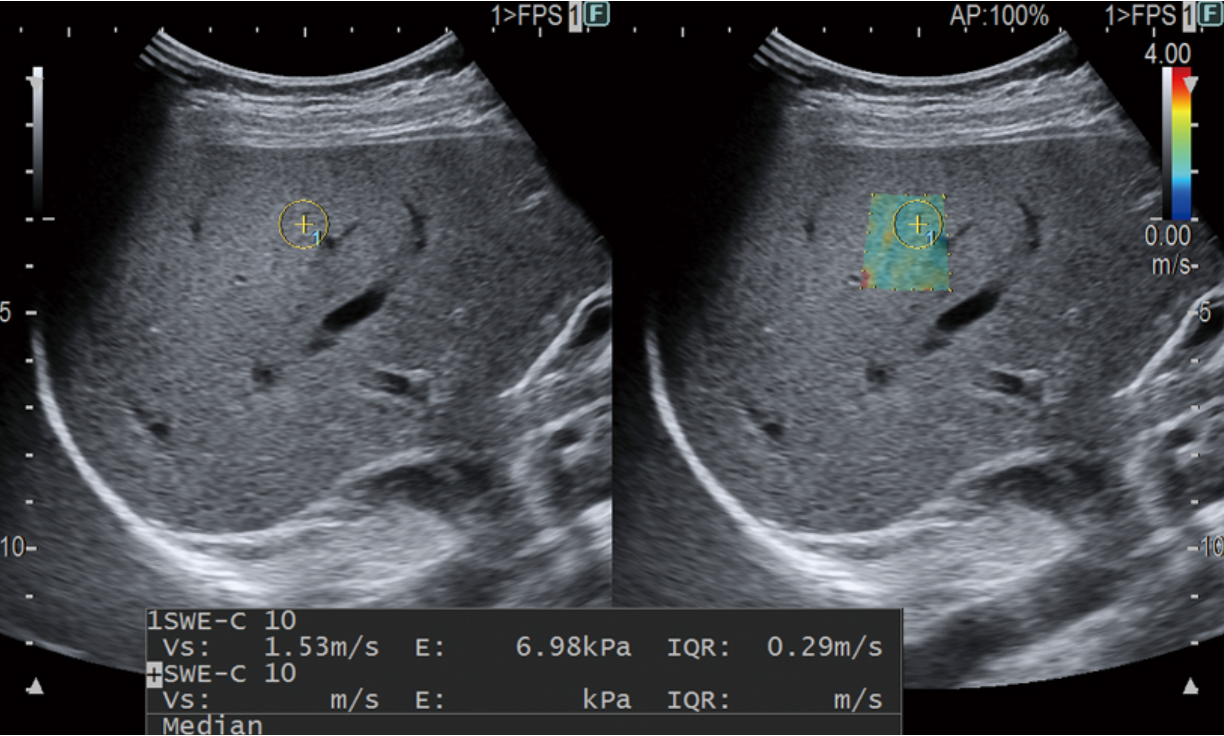
As any intervention in the human body carries a risk of bleeding and infection, an alternative method of determining liver stiffness has long been sought. Shear wave elastography (SWE) is an ultrasound procedure that makes it possible to reliably assess the extent of liver damage in a non-invasive way. It is used to diagnose and monitor the progress of liver scarring (fibrosis) or liver shrinkage (cirrhosis).
During the examination, liver elasticity is determined as a measure of the deformability of the liver tissue. The firmer and less elastic the liver tissue is, the faster the ultrasound waves pass through and deform the tissue. In this way, the connective tissue remodeling of the liver can be visualized in high agreement with the otherwise invasive liver biopsy. The procedure is suitable for documenting the success of drug therapy over time.
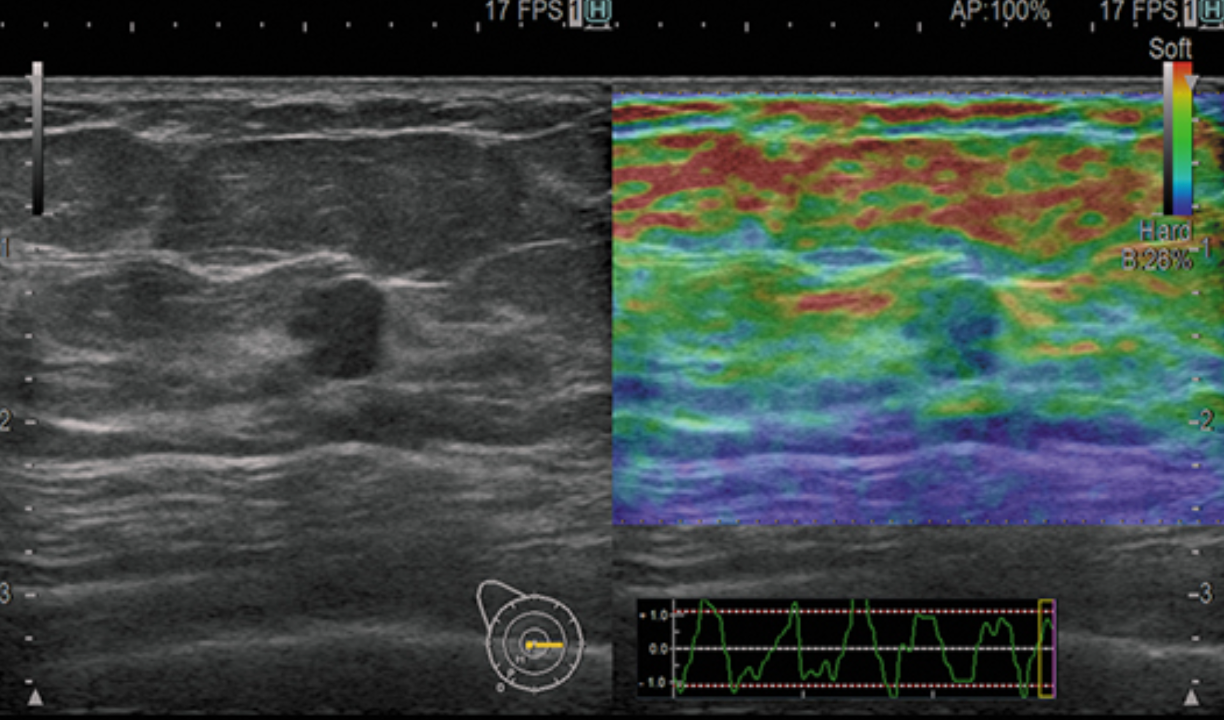
By integrating the two non-invasive methods for assessing liver tissue stiffness (RTE and SWM), a chronological assessment is possible to evaluate the progression of liver inflammation and fibrosis with greater accuracy than before.
As any intervention in the human body carries a risk of bleeding and infection, an alternative method of determining liver stiffness has long been sought. Shear wave elastography (SWE) is an ultrasound procedure that makes it possible to reliably assess the extent of liver damage in a non-invasive way. It is used to diagnose and monitor the progress of liver scarring (fibrosis) or liver shrinkage (cirrhosis).
During the examination, liver elasticity is determined as a measure of the deformability of the liver tissue. The firmer and less elastic the liver tissue is, the faster the ultrasound waves pass through and deform the tissue. In this way, the connective tissue remodeling of the liver can be visualized in high agreement with the otherwise invasive liver biopsy. The procedure is suitable for documenting the success of drug therapy over time.
By integrating the two non-invasive methods for assessing liver tissue stiffness (RTE and SWM), a chronological assessment is possible to evaluate the progression of liver inflammation and fibrosis with greater accuracy than before.
As any intervention in the human body carries a risk of bleeding and infection, an alternative method of determining liver stiffness has long been sought. Shear wave elastography (SWE) is an ultrasound procedure that makes it possible to reliably assess the extent of liver damage in a non-invasive way. It is used to diagnose and monitor the progress of liver scarring (fibrosis) or liver shrinkage (cirrhosis).
During the examination, liver elasticity is determined as a measure of the deformability of the liver tissue. The firmer and less elastic the liver tissue is, the faster the ultrasound waves pass through and deform the tissue. In this way, the connective tissue remodeling of the liver can be visualized in high agreement with the otherwise invasive liver biopsy. The procedure is suitable for documenting the success of drug therapy over time.
By integrating the two non-invasive methods for assessing liver tissue stiffness (RTE and SWM), a chronological assessment is possible to evaluate the progression of liver inflammation and fibrosis with greater accuracy than before.
FAQ questions: Colorectal cancer screening and bowel screening.
Who carries out the screening?
Colonoscopy can be carried out on an outpatient basis in a gastrointestinal practice in almost all cases. A colonoscopy may only be performed by doctors who have completed special training for this examination. To ensure good quality, gastroenterologists must prove that they have performed a specified minimum number of colonoscopies per year. There are also special hygiene regulations and quality standards for practices and clinics that carry out colonoscopies, compliance with which is monitored.
Who carries out the screening?
Colonoscopy can be carried out on an outpatient basis in a gastrointestinal practice in almost all cases. A colonoscopy may only be performed by doctors who have completed special training for this examination. To ensure good quality, gastroenterologists must prove that they have performed a specified minimum number of colonoscopies per year. There are also special hygiene regulations and quality standards for practices and clinics that carry out colonoscopies, compliance with which is monitored.
Who carries out the screening?
Colonoscopy can be carried out on an outpatient basis in a gastrointestinal practice in almost all cases. A colonoscopy may only be performed by doctors who have completed special training for this examination. To ensure good quality, gastroenterologists must prove that they have performed a specified minimum number of colonoscopies per year. There are also special hygiene regulations and quality standards for practices and clinics that carry out colonoscopies, compliance with which is monitored.
Who carries out the screening?
Colonoscopy can be carried out on an outpatient basis in a gastrointestinal practice in almost all cases. A colonoscopy may only be performed by doctors who have completed special training for this examination. To ensure good quality, gastroenterologists must prove that they have performed a specified minimum number of colonoscopies per year. There are also special hygiene regulations and quality standards for practices and clinics that carry out colonoscopies, compliance with which is monitored.
Who carries out the screening?
Colonoscopy can be carried out on an outpatient basis in a gastrointestinal practice in almost all cases. A colonoscopy may only be performed by doctors who have completed special training for this examination. To ensure good quality, gastroenterologists must prove that they have performed a specified minimum number of colonoscopies per year. There are also special hygiene regulations and quality standards for practices and clinics that carry out colonoscopies, compliance with which is monitored.
Who carries out the screening?
Colonoscopy can be carried out on an outpatient basis in a gastrointestinal practice in almost all cases. A colonoscopy may only be performed by doctors who have completed special training for this examination. To ensure good quality, gastroenterologists must prove that they have performed a specified minimum number of colonoscopies per year. There are also special hygiene regulations and quality standards for practices and clinics that carry out colonoscopies, compliance with which is monitored.
Who carries out the screening?
Colonoscopy can be carried out on an outpatient basis in a gastrointestinal practice in almost all cases. A colonoscopy may only be performed by doctors who have completed special training for this examination. To ensure good quality, gastroenterologists must prove that they have performed a specified minimum number of colonoscopies per year. There are also special hygiene regulations and quality standards for practices and clinics that carry out colonoscopies, compliance with which is monitored.
Who carries out the screening?
Colonoscopy can be carried out on an outpatient basis in a gastrointestinal practice in almost all cases. A colonoscopy may only be performed by doctors who have completed special training for this examination. To ensure good quality, gastroenterologists must prove that they have performed a specified minimum number of colonoscopies per year. There are also special hygiene regulations and quality standards for practices and clinics that carry out colonoscopies, compliance with which is monitored.
Who carries out the screening?
Colonoscopy can be carried out on an outpatient basis in a gastrointestinal practice in almost all cases. A colonoscopy may only be performed by doctors who have completed special training for this examination. To ensure good quality, gastroenterologists must prove that they have performed a specified minimum number of colonoscopies per year. There are also special hygiene regulations and quality standards for practices and clinics that carry out colonoscopies, compliance with which is monitored.