
Contrast ultrasound (CEUS)
Contrast-enhanced ultrasound (CEUS) combines the proven advantages of sonography with the benefits of contrast media. CEUS is an ultrasound procedure that can be used to examine the blood flow in organs very precisely. Basically, it is a completely normal ultrasound examination in which microscopically small, gas-filled microbubbles are injected into the vein as a contrast agent and transported with the blood flow.doppler ultrasound, although effective in visualizing fluids, does not achieve the image clarity achieved by contrast sonography.
In contrast to other radiological procedures such as computer tomography, contrast sonography offers a detailed view of organs and tissue without X-rays.
A special ultrasound contrast agent is used in very small quantities (0.5-1ml) during the ultrasound examination. The contrast agent consists of gas-filled microbubbles, which are injected into the vein.
How is contrast agent sonography physically understood?
The microbubbles contain sulphur hexafluoride, a non-toxic and very stable gas that is also used in eye surgery, for example. It does not affect the kidneys or thyroid gland and is exhaled through the lungs after a few minutes. Side effects are extremely rare. The bubbles are very echogenic, i.e. they produce a high acoustic reflex and are therefore very clearly visible on ultrasound images. The microbubbles are around 1 to 4 micrometers in size and begin to oscillate in the ultrasound field. The non-linear oscillations of high amplitude can be easily separated from tissue signals and thus make it possible to observe the vessels and the blood supply to tissue.
What happens to the gas from microbubbles in the body?
The gas in microbubbles is exhaled during passage through the lungs without being absorbed into the body's organs.
How well tolerated is the contrast medium?
The contrast medium, which is used in very small quantities of 0.5 - 1 ml, is generally very well tolerated and, unlike CT contrast medium, can also be used in the case of kidney or thyroid problems.
For which examinations can contrast-enhanced sonography be used?
Contrast-enhanced ultrasound examinations are used for
- Vascular injuries, vascular tumors and vascular anomalies
- Assessment of liver perfusion
- Differentiation between benign and malignant masses in the abdominal cavity
Contrast-enhanced sonography thus offers a major diagnostic gain in everyday clinical practice with comparatively little effort. The material costs are regularly covered by health insurance.
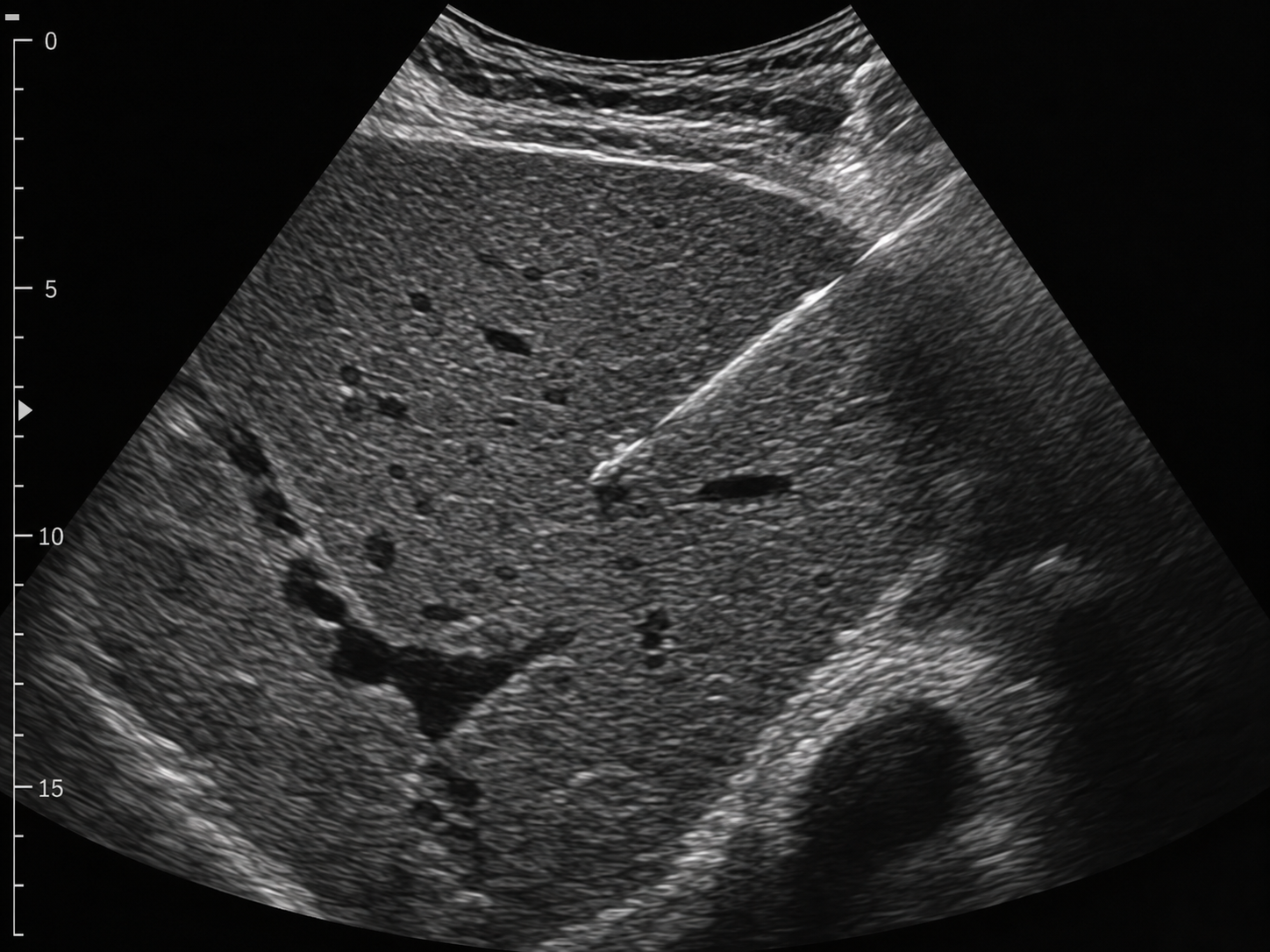
Contrast-enhanced ultrasound (CEUS) combines the proven advantages of sonography with the benefits of contrast media. CEUS is an ultrasound procedure that can be used to examine the blood flow in organs very precisely. Basically, it is a completely normal ultrasound examination in which microscopically small, gas-filled microbubbles are injected into the vein as a contrast agent and transported with the blood flow.doppler ultrasound, although effective in visualizing fluids, does not achieve the image clarity achieved by contrast sonography.
In contrast to other radiological procedures such as computer tomography, contrast sonography offers a detailed view of organs and tissue without X-rays.
A special ultrasound contrast agent is used in very small quantities (0.5-1ml) during the ultrasound examination. The contrast agent consists of gas-filled microbubbles, which are injected into the vein.
How is contrast agent sonography physically understood?
The microbubbles contain sulphur hexafluoride, a non-toxic and very stable gas that is also used in eye surgery, for example. It does not affect the kidneys or thyroid gland and is exhaled through the lungs after a few minutes. Side effects are extremely rare. The bubbles are very echogenic, i.e. they produce a high acoustic reflex and are therefore very clearly visible on ultrasound images. The microbubbles are around 1 to 4 micrometers in size and begin to oscillate in the ultrasound field. The non-linear oscillations of high amplitude can be easily separated from tissue signals and thus make it possible to observe the vessels and the blood supply to tissue.
What happens to the gas from microbubbles in the body?
The gas in microbubbles is exhaled during passage through the lungs without being absorbed into the body's organs.
How well tolerated is the contrast medium?
The contrast medium, which is used in very small quantities of 0.5 - 1 ml, is generally very well tolerated and, unlike CT contrast medium, can also be used in the case of kidney or thyroid problems.
For which examinations can contrast-enhanced sonography be used?
Contrast-enhanced ultrasound examinations are used for
- Vascular injuries, vascular tumors and vascular anomalies
- Assessment of liver perfusion
- Differentiation between benign and malignant masses in the abdominal cavity
Contrast-enhanced sonography thus offers a major diagnostic gain in everyday clinical practice with comparatively little effort. The material costs are regularly covered by health insurance.
Contrast-enhanced ultrasound (CEUS) combines the proven advantages of sonography with the benefits of contrast media. CEUS is an ultrasound procedure that can be used to examine the blood flow in organs very precisely. Basically, it is a completely normal ultrasound examination in which microscopically small, gas-filled microbubbles are injected into the vein as a contrast agent and transported with the blood flow.doppler ultrasound, although effective in visualizing fluids, does not achieve the image clarity achieved by contrast sonography.
In contrast to other radiological procedures such as computer tomography, contrast sonography offers a detailed view of organs and tissue without X-rays.
A special ultrasound contrast agent is used in very small quantities (0.5-1ml) during the ultrasound examination. The contrast agent consists of gas-filled microbubbles, which are injected into the vein.
How is contrast agent sonography physically understood?
The microbubbles contain sulphur hexafluoride, a non-toxic and very stable gas that is also used in eye surgery, for example. It does not affect the kidneys or thyroid gland and is exhaled through the lungs after a few minutes. Side effects are extremely rare. The bubbles are very echogenic, i.e. they produce a high acoustic reflex and are therefore very clearly visible on ultrasound images. The microbubbles are around 1 to 4 micrometers in size and begin to oscillate in the ultrasound field. The non-linear oscillations of high amplitude can be easily separated from tissue signals and thus make it possible to observe the vessels and the blood supply to tissue.
What happens to the gas from microbubbles in the body?
The gas in microbubbles is exhaled during passage through the lungs without being absorbed into the body's organs.
How well tolerated is the contrast medium?
The contrast medium, which is used in very small quantities of 0.5 - 1 ml, is generally very well tolerated and, unlike CT contrast medium, can also be used in the case of kidney or thyroid problems.
For which examinations can contrast-enhanced sonography be used?
Contrast-enhanced ultrasound examinations are used for
- Vascular injuries, vascular tumors and vascular anomalies
- Assessment of liver perfusion
- Differentiation between benign and malignant masses in the abdominal cavity
Contrast-enhanced sonography thus offers a major diagnostic gain in everyday clinical practice with comparatively little effort. The material costs are regularly covered by health insurance.
FAQ questions: Colorectal cancer screening and bowel screening.
Who carries out the screening?
Colonoscopy can be carried out on an outpatient basis in a gastrointestinal practice in almost all cases. A colonoscopy may only be performed by doctors who have completed special training for this examination. To ensure good quality, gastroenterologists must prove that they have performed a specified minimum number of colonoscopies per year. There are also special hygiene regulations and quality standards for practices and clinics that carry out colonoscopies, compliance with which is monitored.
Who carries out the screening?
Colonoscopy can be carried out on an outpatient basis in a gastrointestinal practice in almost all cases. A colonoscopy may only be performed by doctors who have completed special training for this examination. To ensure good quality, gastroenterologists must prove that they have performed a specified minimum number of colonoscopies per year. There are also special hygiene regulations and quality standards for practices and clinics that carry out colonoscopies, compliance with which is monitored.
Who carries out the screening?
Colonoscopy can be carried out on an outpatient basis in a gastrointestinal practice in almost all cases. A colonoscopy may only be performed by doctors who have completed special training for this examination. To ensure good quality, gastroenterologists must prove that they have performed a specified minimum number of colonoscopies per year. There are also special hygiene regulations and quality standards for practices and clinics that carry out colonoscopies, compliance with which is monitored.
Who carries out the screening?
Colonoscopy can be carried out on an outpatient basis in a gastrointestinal practice in almost all cases. A colonoscopy may only be performed by doctors who have completed special training for this examination. To ensure good quality, gastroenterologists must prove that they have performed a specified minimum number of colonoscopies per year. There are also special hygiene regulations and quality standards for practices and clinics that carry out colonoscopies, compliance with which is monitored.
Who carries out the screening?
Colonoscopy can be carried out on an outpatient basis in a gastrointestinal practice in almost all cases. A colonoscopy may only be performed by doctors who have completed special training for this examination. To ensure good quality, gastroenterologists must prove that they have performed a specified minimum number of colonoscopies per year. There are also special hygiene regulations and quality standards for practices and clinics that carry out colonoscopies, compliance with which is monitored.
Who carries out the screening?
Colonoscopy can be carried out on an outpatient basis in a gastrointestinal practice in almost all cases. A colonoscopy may only be performed by doctors who have completed special training for this examination. To ensure good quality, gastroenterologists must prove that they have performed a specified minimum number of colonoscopies per year. There are also special hygiene regulations and quality standards for practices and clinics that carry out colonoscopies, compliance with which is monitored.
Who carries out the screening?
Colonoscopy can be carried out on an outpatient basis in a gastrointestinal practice in almost all cases. A colonoscopy may only be performed by doctors who have completed special training for this examination. To ensure good quality, gastroenterologists must prove that they have performed a specified minimum number of colonoscopies per year. There are also special hygiene regulations and quality standards for practices and clinics that carry out colonoscopies, compliance with which is monitored.
Who carries out the screening?
Colonoscopy can be carried out on an outpatient basis in a gastrointestinal practice in almost all cases. A colonoscopy may only be performed by doctors who have completed special training for this examination. To ensure good quality, gastroenterologists must prove that they have performed a specified minimum number of colonoscopies per year. There are also special hygiene regulations and quality standards for practices and clinics that carry out colonoscopies, compliance with which is monitored.
Who carries out the screening?
Colonoscopy can be carried out on an outpatient basis in a gastrointestinal practice in almost all cases. A colonoscopy may only be performed by doctors who have completed special training for this examination. To ensure good quality, gastroenterologists must prove that they have performed a specified minimum number of colonoscopies per year. There are also special hygiene regulations and quality standards for practices and clinics that carry out colonoscopies, compliance with which is monitored.
What happens if polyps are detected?
Polyps are found in around 50% of patients during a colonoscopy. If they are small and inconspicuous, a follow-up examination after 10 years is usually sufficient. However, larger or more conspicuous polyps require earlier follow-up (usually after 3-5 years). We use various polyp removal procedures, such as cold snare ablation or underwater EMR, to safely remove the polyps.

Contrast-enhanced ultrasound (CEUS) combines the proven advantages of sonography with the benefits of contrast media. CEUS is an ultrasound procedure that can be used to examine the blood flow in organs very precisely. Basically, it is a completely normal ultrasound examination in which microscopically small, gas-filled microbubbles are injected into the vein as a contrast agent and transported with the blood flow.doppler ultrasound, although effective in visualizing fluids, does not achieve the image clarity achieved by contrast sonography.
In contrast to other radiological procedures such as computer tomography, contrast sonography offers a detailed view of organs and tissue without X-rays.
A special ultrasound contrast agent is used in very small quantities (0.5-1ml) during the ultrasound examination. The contrast agent consists of gas-filled microbubbles, which are injected into the vein.
How is contrast agent sonography physically understood?
The microbubbles contain sulphur hexafluoride, a non-toxic and very stable gas that is also used in eye surgery, for example. It does not affect the kidneys or thyroid gland and is exhaled through the lungs after a few minutes. Side effects are extremely rare. The bubbles are very echogenic, i.e. they produce a high acoustic reflex and are therefore very clearly visible on ultrasound images. The microbubbles are around 1 to 4 micrometers in size and begin to oscillate in the ultrasound field. The non-linear oscillations of high amplitude can be easily separated from tissue signals and thus make it possible to observe the vessels and the blood supply to tissue.
What happens to the gas from microbubbles in the body?
The gas in microbubbles is exhaled during passage through the lungs without being absorbed into the body's organs.
How well tolerated is the contrast medium?
The contrast medium, which is used in very small quantities of 0.5 - 1 ml, is generally very well tolerated and, unlike CT contrast medium, can also be used in the case of kidney or thyroid problems.
For which examinations can contrast-enhanced sonography be used?
Contrast-enhanced ultrasound examinations are used for
- Vascular injuries, vascular tumors and vascular anomalies
- Assessment of liver perfusion
- Differentiation between benign and malignant masses in the abdominal cavity
Contrast-enhanced sonography thus offers a major diagnostic gain in everyday clinical practice with comparatively little effort. The material costs are regularly covered by health insurance.