
Endoscopic sleeve gastrectomy as a revision procedure: Minimally invasive treatment for decreasing restriction after surgical gastric reduction
What is endoscopic sleeve gastroplasty (rESG) as a revision procedure?
Endoscopic sleeve gastroplasty (rESG) is a minimally invasive procedure for stomach reduction that does not require an incision through the abdomen. In the revision procedure, ESG is used if a previous bariatric operation (e.g. a sleeve gastrectomy or a Roux-Y gastric bypass) has already taken place, but weight regain, weight recurrence or an expansion of the stomach structure has occurred, for example. In such cases, rESG can be used to narrow the stomach volume again endoscopically and thus reactivate the effect of the original therapy.
The method is used as part of endobariatrics - the endoscopic treatment of overweight and obesity - and is a gentler alternative to further surgery.
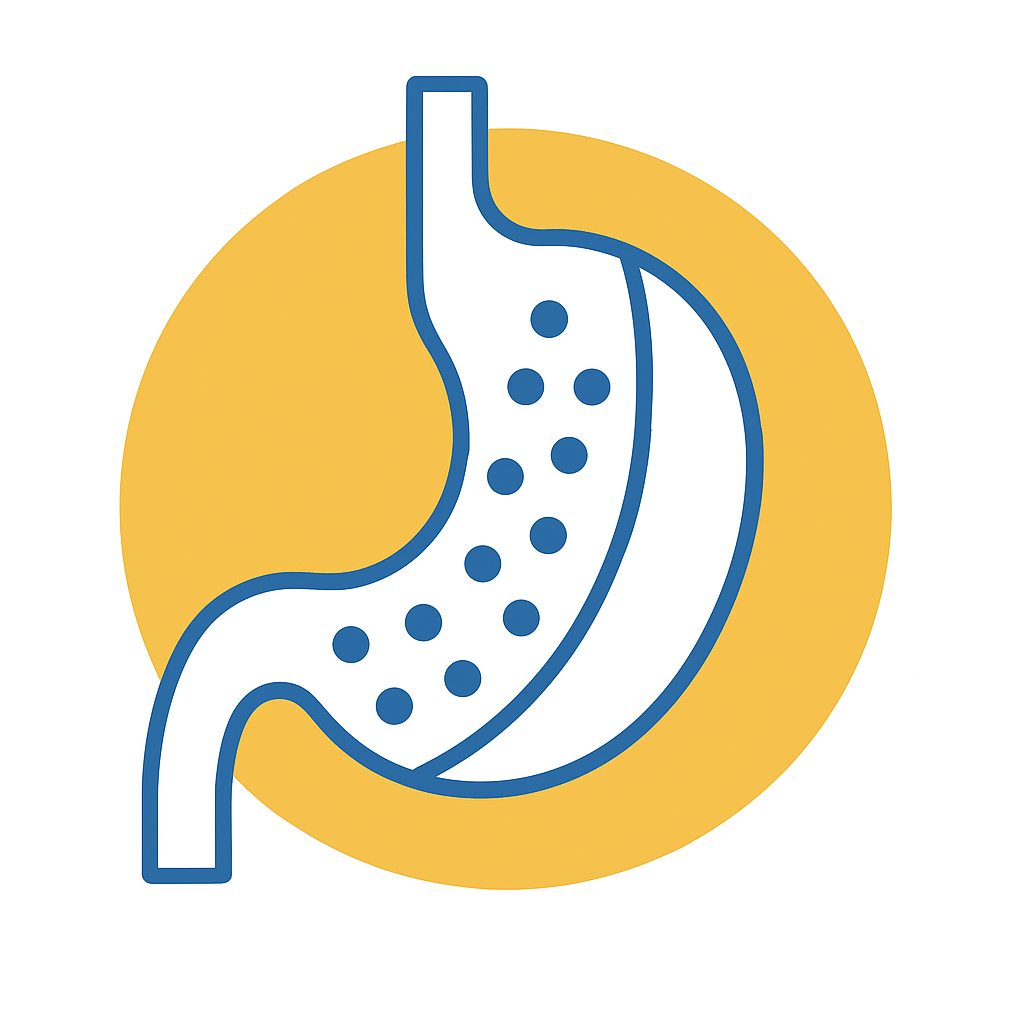
Anatomy: A distended stomach after sleeve gastrectomy is brought back into tubular form with sutures: volume reduction using endoscopic sleeve gastroplasty as a revision procedure (rESG).
Indication - When is revision rESG advisable?
An endoscopic revision is recommended if weight regain occurs after a gastric reduction or gastric bypass or if the stomach has enlarged again due to stretching. This is often caused by a dilated gastric sleeve or a dilated connection between the stomach and small intestine. Patients for whom a second surgical operation would be too risky or who are looking for a less invasive alternative also benefit from the endoscopic technique. It is important that those affected are prepared to make long-term adjustments to their lifestyle and diet in order to stabilize the effect.
Procedure - Gentle, precise and incision-free
Endoscopic sleeve gastroplasty is performed under general anesthesia and accompanied by an experienced anesthesia team that ensures safety during the entire procedure. a flexible endoscope is inserted into the stomach via the mouth, with a special suture system attached to the tip. Under visual control, several sutures are placed along the stomach wall to tighten and reduce the size of the stomach. This creates a new, tubular structure that significantly reduces the volume of the stomach and makes you feel full sooner.
As no incisions through the abdominal wall are necessary, the procedure leaves no scars. The procedure usually takes less than an hour and can be performed on an outpatient basis in many cases. Patients remain under observation afterwards and can often go home the same day or the next. RESG is scientifically monitored in specialized centers to ensure the highest safety standards and continuous quality control.
Outcome - effective weight reduction and improved health
Several clinical studies confirm the effectiveness of endoscopic sleeve gastroplasty. On average, patients achieve a weight reduction of around 15 to 20 percent of their initial weight within the first year after the procedure. The results of revision procedures are also very positive: the shape of the stomach is narrowed again, the previous feeling of fullness returns and weight gain can be stopped or reversed.
In addition to weight loss, there are often significant improvements in concomitant diseases such as high blood pressure, type 2 diabetes or sleep apnea. However, long-term success depends largely on the active cooperation of the patient - in particular a balanced diet, regular exercise and participation in aftercare programs.
Advantages and possible disadvantages
A major advantage of rESG is that it is minimally invasive. No abdominal incisions are necessary, the risk of complications is significantly lower than with a surgical revision, and the recovery time is short. The stomach remains completely intact, no parts are removed and the method is considered potentially reversible.
Another advantage is that it can be performed on an outpatient basis - many patients can go home on the same day. Studies also report a very low complication rate and high patient satisfaction.
As with any procedure, there are potential limitations. Not all patients are anatomically or health-wise suitable for rESG. The weight loss achieved is usually somewhat less than with another surgical procedure, and long-term results over many years are still limited. Consistent adjustment of lifestyle and diet remains crucial - without this, the effect can diminish over time.
FAQ - Frequently asked questions
Does the procedure hurt?
No. The procedure is performed under anesthesia, so no pain is felt. After rESG, you may experience a slight feeling of pressure, nausea or fullness for one to two days, which usually subsides quickly.
How long will I be unable to work?
As a rule, a few days of rest are sufficient. Many patients return to work within a week.
How much weight can I lose?
The result varies from person to person. On average, 10 - 20 % of body weight is reduced within the first year if dietary and lifestyle measures are adhered to at the same time.
How safe is the ESG revision?
The procedure is considered very safe. As no incisions are necessary, complications such as infections or bleeding occur much less frequently than with surgical procedures. The rESG is also carried out under constant scientific supervision.
Does health insurance pay for the procedure?
The assumption of costs depends on the individual case. Prior consultation with Vivomed or a specialized center is therefore recommended.
Conclusion
Endoscopic sleeve gastroplasty (rESG) as a revision procedure is a gentle, safe and scientifically supported method of restoring the effect of a previous stomach reduction. It combines effective weight reduction with minimal surgical risk, short recovery time and high patient satisfaction. RESG offers a convincing, modern alternative for people who have regained weight after bariatric surgery or would like to avoid a repeat operation.