
Weight reduction through endobariatric therapy: losing weight without surgery with the gastric balloon.
What is a gastric balloon and how does it work? A gastric balloon is an inflatable medical device that is inserted endoscopically into the stomach to promote satiety and reduce food intake. It offers a non-surgical option for people who want to lose weight.
What is a gastric balloon and how does it work? A gastric balloon is an inflatable medical device that is inserted endoscopically into the stomach to promote satiety and reduce food intake. It offers a non-surgical option for people who want to lose weight.
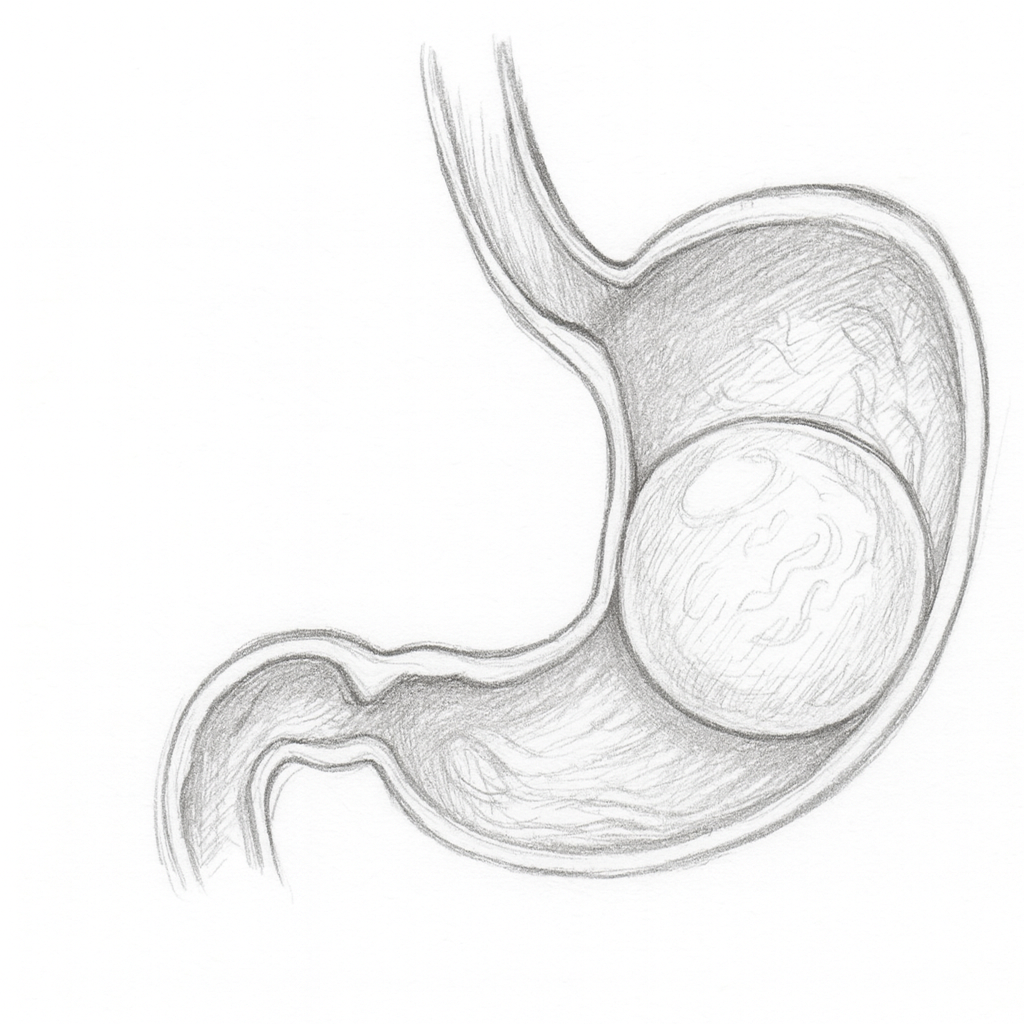
Schematic drawing: Gastric balloon
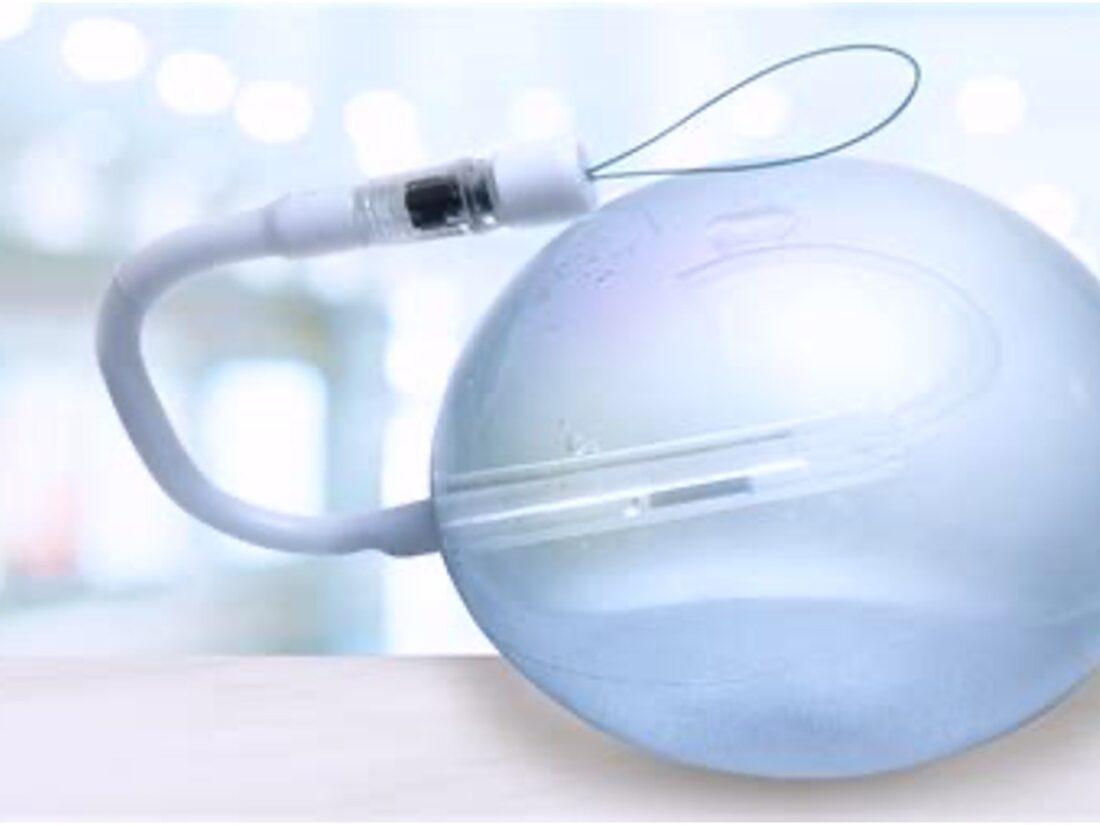
Depending on the manufacturer, the gastric balloon can remain in the stomach for between 6 and 12 months and help with successful weight loss. In the meantime, you will make dietary adjustments with an interdisciplinary team and increase your physical activity so that you have the best possible starting conditions for a healthier life once the balloon has been removed.

Depending on the manufacturer, the gastric balloon can remain in the stomach for between 6 and 12 months and help with successful weight loss. In the meantime, you will make dietary adjustments with an interdisciplinary team and increase your physical activity so that you have the best possible starting conditions for a healthier life once the balloon has been removed.
The procedure with a gastric balloon:
Preliminary examination: An interdisciplinary assessment is carried out to check suitability for a gastric balloon. Placement of the balloon: Under light sedation, the empty balloon is inserted into the stomach through the mouth and then filled with liquid. Feeling of fullness: The balloon takes up space in the stomach, which leads to a faster feeling of fullness and reduced food intake. Accompanying measures: An individualized diet and exercise program is recommended to optimize weight loss.
Advantages of the gastric balloon:
Non-surgical: the gastric balloon is inserted and removed without surgery.
Quick placement: The procedure usually only takes about 20-30 minutes.
Weight loss support: The balloon promotes a feeling of fullness, making it easier to switch to a healthier lifestyle.
Disadvantages of the gastric balloon:
Like endoscopic gastric sleeve surgery in Switzerland, the gastric balloon is a self-pay procedure, as it is not usually covered by health insurance despite its effectiveness and low cost. Although the widespread epidemic of obesity with all its associated secondary diseases places a heavy burden on the entire healthcare system and patients, insurance companies prefer to pay for globules rather than for genuine preventive services that would be for the benefit of their policyholders.
Are there different types of gastric balloons?
- Adjustable gastric balloon (SPATZ3): While other types of gastric balloons can be used for weight loss, the Spatz3 is the only one that can be adjusted after placement in the stomach.
In the early stages, the adjustable design can help patients who experience discomfort or balloon intolerance to easily remove a portion of the saline solution without having to remove the balloon itself.
If weight loss stagnates during balloon treatment, the device can be readjusted by adding more saline to create a greater sense of satiety and improve weight loss results. The balloon is usually removed after 8-12 months with no permanent changes to your anatomy.
- Obera 365 Gastric Balloon: The ORBERA® Managed Weight Loss System is a non-surgical procedure that helps patients initiate and maintain long-term weight loss. The procedure involves inserting a small silicone balloon into the stomach under light sedation. Once the balloon is placed in the stomach, it is filled with saline solution. The inflated balloon takes up space in the stomach so that you feel fuller more quickly, eat smaller portions and lose weight. The balloon is usually removed after 12 months. While other types of gastric balloons can also be used for weight loss, the ORBERA® balloon differs in that it is completely smooth and contains no extra parts, which helps to minimize irritation in the stomach.
Who is Orbera suitable for? ORBERA® is well suited for moderately overweight individuals 18 years and older who have not had success with diet and exercise alone, but still want to reduce their weight without surgery. The ORBERA® balloon offers an alternative to invasive surgical weight loss procedures and may be a good option for those who are reluctant to undergo surgery or do not want to take expensive medications such as Wegovy/Ozempic/Semaglutide or Mounjaro/Tirzepatide in the long term.
Is the gastric balloon the right choice for you? The decision to have a gastric balloon should be made on an individual basis. Consult your doctor to discuss your specific situation and evaluate the best options for your health.
Conclusion: The gastric balloon offers a gentle and non-surgical way to support your weight loss goals. If you would like to find out more or would like a personalized consultation, please contact us. Our team of experienced experts are on hand to guide you on your journey to a healthier lifestyle.
about the author: Dr. Stefan Schlosser is a specialist in gastroenterology and general internal medicine and holds a master's degree in health economics. With over 20 years of professional experience, he has a wealth of clinical and scientific experience. He specializes in interventional minimally invasive endoscopy, functional diagnostics and endobariology. Dr. Schlosser is a course leader for the SGUM in ultrasound training for young doctors and is a member of the Swiss, European and American Society of Gastroenterology (SGG, ESGE, ASGE). He works in an SIWF-recognized outpatient training center in Bern.
Welche Risiken hat eine Magenballonbehandlung?
Der Magenballon ist ein nichtchirurgisches, aber invasives beziehungsweise körperinternes Medizinprodukt.
Eine sorgfältige Indikationsstellung und Überwachung sind notwendig.
Häufige Beschwerden
- Übelkeit und Erbrechen
- Druckgefühl im Oberbauch
- Bauchkrämpfe
- Reflux und Sodbrennen
- Verminderte Nahrungsaufnahme
- Flüssigkeitsmangel bei anhaltendem Erbrechen
Diese Beschwerden treten besonders während der Eingewöhnungsphase auf.
Seltene, aber relevante Komplikationen
- Magengeschwüre und Blutungen
- Akute Pankreatitis
- Spontane Überblähung des Ballons
- Ballondefekt oder vorzeitige Entleerung
- Verlagerung des Ballons mit möglichem Darmverschluss
- Magenperforation
- Komplikationen der Endoskopie oder Sedierung
Besondere Risiken justierbarer Ballons
Bei Systemen mit einem Anpassungsventil sind auch technische Funktionsstörungen, Probleme bei einer Volumenanpassung oder eine vorzeitige Entfernung möglich.
Wann muss ich sofort ärztliche Hilfe suchen?
Folgende Symptome erfordern eine umgehende Beurteilung:
- Starke oder zunehmende Oberbauchschmerzen
- Anhaltendes Erbrechen oder Unfähigkeit, Flüssigkeit zu trinken
- Ausgeprägte Kreislaufbeschwerden
- Fieber oder deutliche Verschlechterung des Allgemeinzustands
- Bluterbrechen oder Teerstuhl
- Aufgetriebener Bauch mit fehlendem Stuhl- oder Windabgang
Bei schweren Beschwerden ist eine notfallmässige Abklärung erforderlich.
Eine Ballonbehandlung sollte deshalb nur erfolgen, wenn auch ein geeigneter medizinischer Zugang bei Komplikationen sichergestellt ist.
Magenballon, endoskopische Magenverkleinerung oder Medikamente?
Bei Adipositas gibt es unterschiedliche Behandlungsmöglichkeiten.
Die Wahl sollte sich nach BMI, Begleiterkrankungen, bisherigen Therapieerfahrungen, Behandlungszielen und persönlichen Präferenzen richten.
Magenballon
Der Magenballon ist eine zeitlich begrenzte und nichtchirurgische Behandlungsoption.
Er verändert die Magenanatomie nicht dauerhaft und wird nach Ablauf der vorgesehenen Zeit entfernt.
Endoskopische Magenverkleinerung
Bei der endoskopischen Magenverkleinerung wird die Magenkonfiguration durch spezielle Nähte verändert.
Hierzu gehören beispielsweise die endoskopische Sleeve-Gastroplastie (ESG) und POSE-2.0-Verfahren.
Diese Verfahren verfolgen im Gegensatz zum Magenballon eine längerfristige Veränderung der Magenform.
Endoskopische Magenverkleinerung: ESG und POSE 2.0
Medikamentöse Adipositastherapie
Medikamente zur Gewichtsreduktion, beispielsweise auf Basis von GLP-1- oder GIP/GLP-1-Rezeptoragonisten, können bei geeigneten Patienten eine wirksame Behandlungsoption sein.
Sie unterscheiden sich hinsichtlich Wirkmechanismus, Nebenwirkungen, Dauer und Kosten von einer Ballontherapie.
Bariatrische Chirurgie
Bei ausgeprägter Adipositas oder relevanten Begleiterkrankungen kann eine bariatrische Operation die medizinisch geeignetere Behandlungsstrategie sein.
Alle Möglichkeiten zur medizinischen Gewichtsreduktion bei Vivomed
Was kostet ein Magenballon in der Schweiz?
Die Kosten einer Magenballonbehandlung hängen vom verwendeten System, der medizinischen Betreuung und den enthaltenen Leistungen ab.
Zu einem Behandlungskonzept können unter anderem gehören:
- Bariatrische Erstberatung und medizinische Abklärung
- Gegebenenfalls Gastroskopie
- Magenballon und endoskopische Einlage
- Sedierung und Überwachung
- Ernährungsmedizinische Betreuung
- Verlaufskontrollen
- Endoskopische Ballonentfernung
Eine endoskopische Magenballontherapie ist in der Schweiz häufig eine Selbstzahlerleistung.
Eine Kostenübernahme durch die obligatorische Krankenpflegeversicherung ist nicht gewährleistet.
Vor Beginn sollten sowohl die Behandlungskosten als auch die enthaltenen Nachsorgeleistungen geklärt werden.
Bei Vivomed erhalten Sie im Rahmen der individuellen Beratung Informationen über das geeignete System und die voraussichtlichen Kosten.
FAQ questions: Colorectal cancer screening and bowel screening.
Who carries out the screening?
Colonoscopy can be carried out on an outpatient basis in a gastrointestinal practice in almost all cases. A colonoscopy may only be performed by doctors who have completed special training for this examination. To ensure good quality, gastroenterologists must prove that they have performed a specified minimum number of colonoscopies per year. There are also special hygiene regulations and quality standards for practices and clinics that carry out colonoscopies, compliance with which is monitored.
Brauche ich regelmässige Darmspiegelungen?
Nicht bei jeder Kontrolle. Endoskopien werden zur Diagnosestellung, zur Beurteilung des Therapieerfolgs und bei langjährigem Dickdarmbefall zur Darmkrebsvorsorge eingesetzt. Das Intervall wird individuell festgelegt.
Kann man während derselben Endosonographie eine Biopsie entnehmen?
Ja. Wenn die medizinische Indikation besteht und die Punktion vorbereitet wurde, kann die Gewebeentnahme im Rahmen derselben Untersuchung erfolgen.
Müssen Blutverdünner vor der Biopsie abgesetzt werden?
Das hängt vom Medikament, dem Blutungsrisiko und der individuellen Situation ab. Gerinnungshemmende Medikamente dürfen nicht selbständig abgesetzt werden.
Ist EUS-FNB dasselbe wie eine Gastroskopie?
Nein. Bei der Endosonographie wird ein spezielles Endoskop mit Ultraschalltechnik eingesetzt, das auch tiefere Gewebeschichten und benachbarte Organe darstellen kann.
Wo kann ich eine EUS-FNB in Bern durchführen lassen?
Bei Vivomed – Gastroenterologie Bern bieten wir endosonographische Untersuchungen einschliesslich gezielter Feinnadelbiopsien und Feinnadelaspirationen bei geeigneter Indikation an.
Was passiert, wenn ich den Ballon nicht vertrage?
Bei ausgeprägten Beschwerden erfolgt eine ärztliche Beurteilung. Je nach System und Situation kann eine Anpassung oder vorzeitige Entfernung notwendig werden.
Was kostet ein Magenballon bei Vivomed?
Die Kosten hängen vom verwendeten Ballonsystem und dem enthaltenen Behandlungspaket ab. Sie werden im Rahmen der persönlichen Beratung erläutert.
Übernimmt die Krankenkasse die Magenballonbehandlung?
Die Behandlung ist in der Schweiz eine Selbstzahlerleistung.
Wo kann ich einen Magenballon in Bern einsetzen lassen?
Bei Vivomed – Gastroenterologie Bern bieten wir eine spezialisierte bariatrische Beratung und endoskopische Magenballonbehandlungen bei geeigneter Indikation an.

Magenballon einsetzen lassen bei Vivomed Bern
Sie interessieren sich für einen Magenballon zur medizinisch begleiteten Gewichtsreduktion?
Bei Vivomed – Gastroenterologie Bern beraten wir Sie zu den Möglichkeiten mit Orbera 365 und Spatz3.
Wir prüfen, ob ein Magenballon zu Ihrer medizinischen Situation und Ihren langfristigen Behandlungszielen passt.
Auch Alternativen wie die endoskopische Magenverkleinerung, medikamentöse Adipositastherapie oder bariatrische Chirurgie werden berücksichtigt.
Kontakt und Beratung
Vivomed – Gastroenterologie Bern
Waisenhausplatz 28
3011 Bern
Telefon: 031 333 32 36
E-Mail: vivomed@hin.ch
Medizinisch verantwortlich
Dr. med. Stefan H. Schlosser, MBA, FEBGH
Facharzt FMH für Gastroenterologie und Allgemeine Innere Medizin
Dr. med. Stefan H. Schlosser ist Gastroenterologe und Leiter von Vivomed – Gastroenterologie Bern.
Zu seinen Schwerpunkten gehören die diagnostische und therapeutische Endoskopie, die Endobariatrie und die gastroenterologische Funktionsdiagnostik.
Die Behandlung von Adipositas erfolgt nach individueller Indikationsstellung und unter Berücksichtigung konservativer, medikamentöser und interventioneller Möglichkeiten.
Qualifikationen, klinische Erfahrung und wissenschaftliche Veröffentlichungen
Medizinisch überprüft: Oktober 2026
Wissenschaftliche Grundlagen und Leitlinien
- Jirapinyo P et al. American Society for Gastrointestinal Endoscopy – European Society of Gastrointestinal Endoscopy guideline on primary endoscopic bariatric and metabolic therapies for adults with obesity. Endoscopy. 2024;56:437-456. ASGE-ESGE-Leitlinie 2024
- Muniraj T et al. Intragastric balloons in the management of obesity: AGA Clinical Practice Guideline. Gastroenterology. 2021. AGA-Empfehlungen
- U.S. Food and Drug Administration. Weight-Loss and Weight-Management Devices: Safety Information. FDA-Sicherheitsinformationen
- Medicines and Healthcare products Regulatory Agency. Allurion Gastric Balloon: Updated safety information concerning gastric outlet obstruction, bowel obstruction and gastric perforation. 2026. MHRA-Sicherheitshinweis 2026
Die Informationen dienen der allgemeinen medizinischen Aufklärung und ersetzen keine individuelle ärztliche Beratung oder Untersuchung.
Die genaue Eignung, maximale Liegedauer und Handhabung eines Ballonsystems richten sich nach den gültigen Herstellerangaben und den individuellen medizinischen Voraussetzungen.