
Weight reduction through endobariatric stomach reduction: permanent weight loss with a sleeve stomach without surgery.
What is an endoscopic stomach reduction or endosleeve?
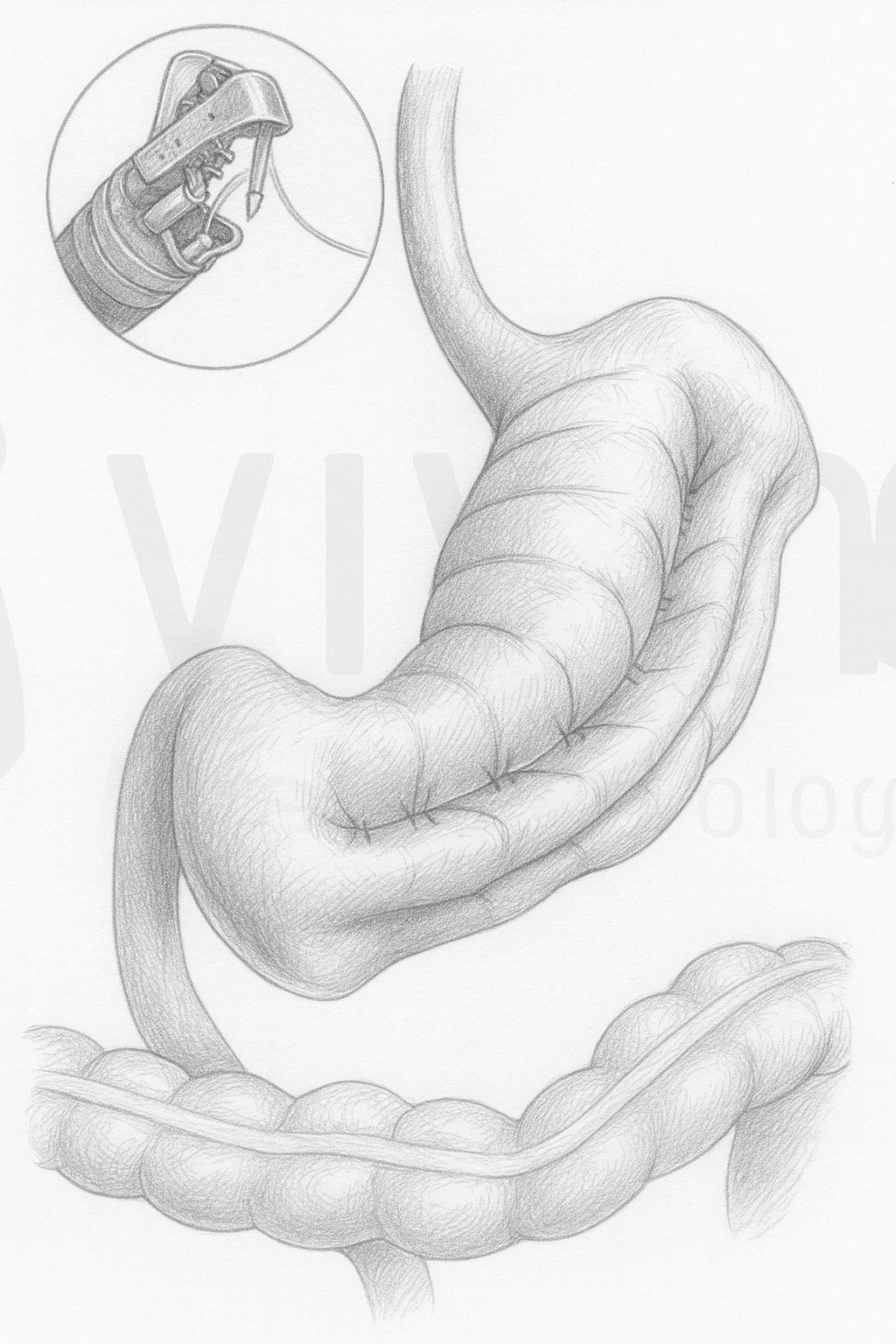
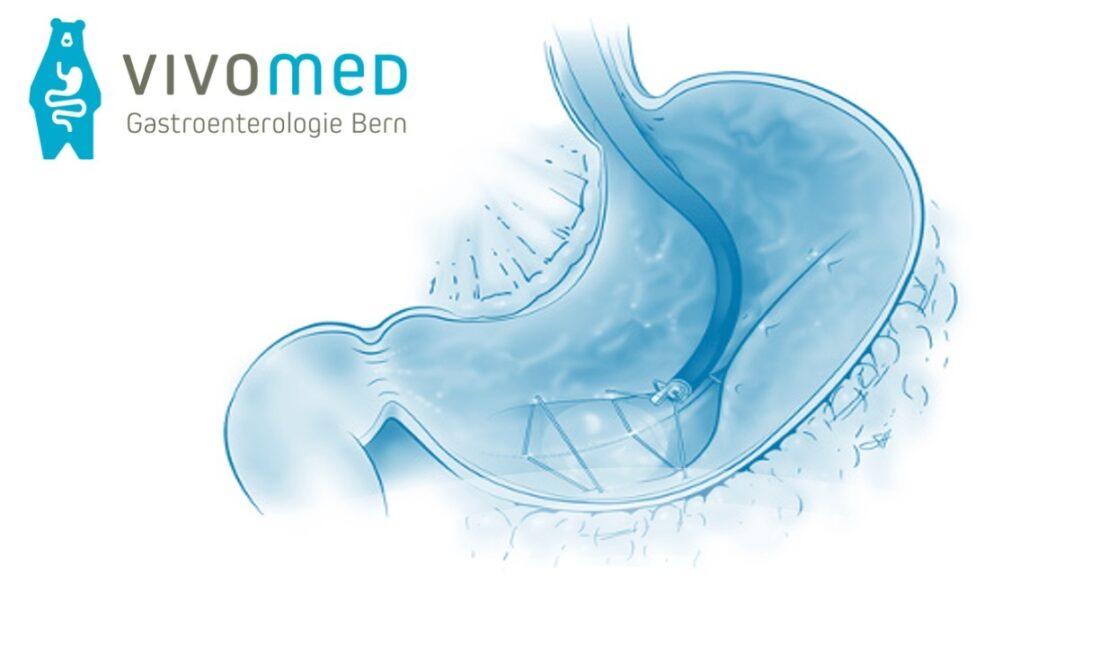
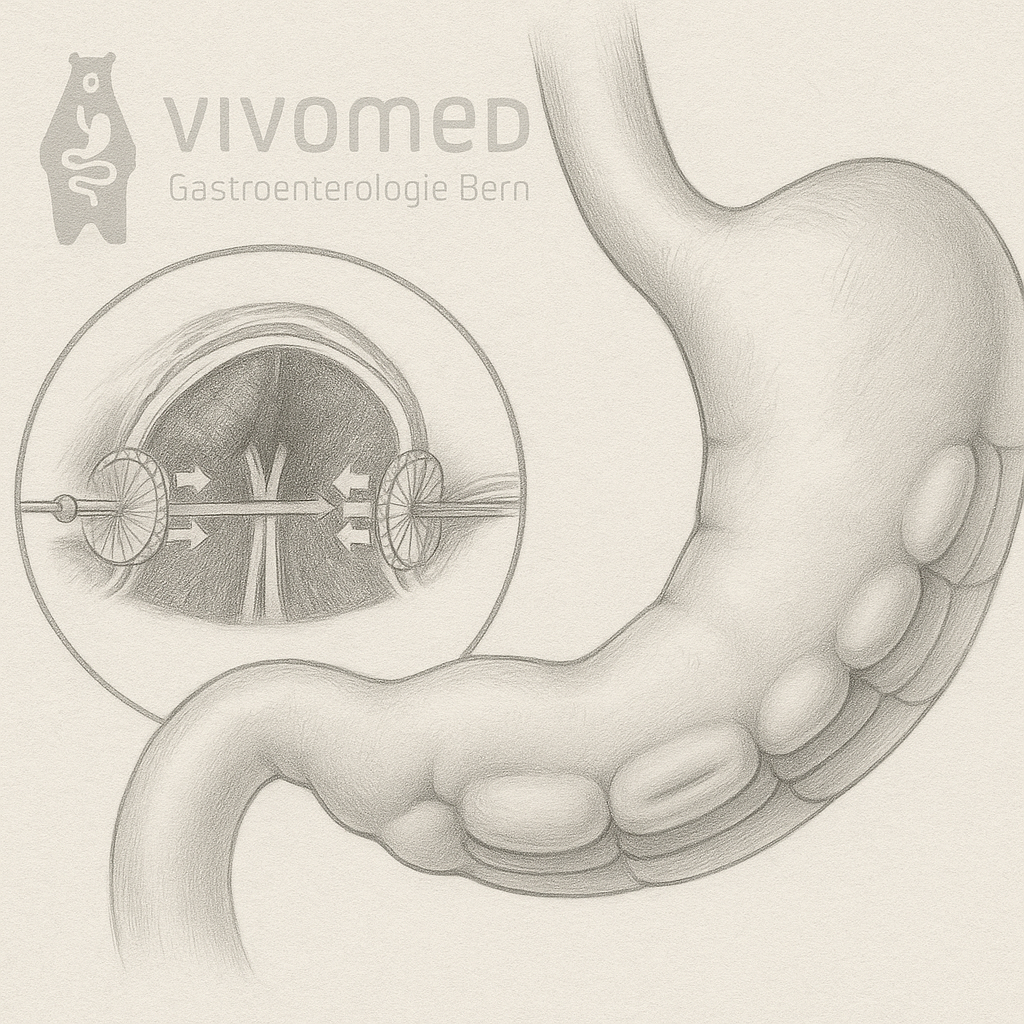
Endoscopic stomach reduction (endosleeve) is a new minimally invasive weight loss procedure in which a flexible endoscope is inserted into the stomach through the mouth. Special sutures (overstitches) are placed there (e.g. using Apollo Endosurgery (ESG), USGI TransPort Technology (POSE II), etc.) to reduce the stomach volume. This leads to faster and longer-lasting satiety.
Why an endoscopic stomach reduction?
Around 1.9 billion adults worldwide are overweight, of which, according to the World Health Organization (WHO), around 650 million people are affected by obesity (BMI ≥ 30).the increase in obesity is a growing health problem as it is linked to a variety of conditions such as type 2 diabetes, cardiovascular disease, high blood pressure, sleep apnea and many other serious health problems.
Treating obesity without invasive surgery: endoscopic stomach reduction
If you are overweight or obese, there are many ways to reduce your body weight. However, many conventional methods such as bariatric surgery leave visible scars and require long recovery times. Weight loss medication also has to be taken on a long-term basis and has undesirable side effects.
Frequently asked questions about endoscopic sleeve gastrectomy (Endoscopic Sleeve Gastroplasty, ESG)
Below you will find answers to frequently asked questions about endoscopic sleeve gastroplasty (ESG). This procedure is also known as endoscopic sleeve gastrectomy, endosleeve, Apollo method or accordion procedure. Find out how ESG works, who is eligible for it, what advantages the procedure offers and what you should consider before and after the procedure.
What is endoscopic sleeve gastroplasty (ESG)?
Endoscopic sleeve gastroplasty (ESG) is a minimally invasive, non-surgical procedure to reduce the size of the stomach by around 70-80%. Unlike a surgical sleeve gastrectomy, no part of the stomach is removed. Instead, doctors insert an endoscope through the mouth into the stomach and use a special suturing tool (e.g. OverStitch) to place several sturdy sutures along the larger curve of the stomach.
This creates a tubular ("sleeve") shape of the stomach, which significantly reduces the volume and allows the feeling of fullness to occur earlier. The procedure was first described in 2013 and has since established itself as a gentle alternative to surgical interventions. We perform the new procedure under scientific supervision and regular quality controls, which was included in the 2024 guideline recommendations for selected patients by the American and European Society of Gastroenterology (ASGE/ESG) (Gastrointest Endosc 2024;99:867-85).
Frequently asked questions about endoscopic sleeve gastrectomy (Endoscopic Sleeve Gastroplasty, ESG)
Below you will find answers to frequently asked questions about endoscopic sleeve gastroplasty (ESG). This procedure is also known as endoscopic sleeve gastrectomy, endosleeve, Apollo method or accordion procedure. Find out how ESG works, who is eligible for it, what advantages the procedure offers and what you should consider before and after the procedure.
What is endoscopic sleeve gastroplasty (ESG)?
Endoscopic sleeve gastroplasty (ESG) is a minimally invasive, non-surgical procedure to reduce the size of the stomach by around 70-80%. Unlike a surgical sleeve gastrectomy, no part of the stomach is removed. Instead, doctors insert an endoscope through the mouth into the stomach and use a special suturing tool (e.g. OverStitch) to place several sturdy sutures along the larger curve of the stomach.
This creates a tubular ("sleeve") shape of the stomach, which significantly reduces the volume and allows the feeling of fullness to occur earlier. The procedure was first described in 2013 and has since established itself as a gentle alternative to surgical interventions. We perform the new procedure under scientific supervision and regular quality controls, which was included in the 2024 guideline recommendations for selected patients by the American and European Society of Gastroenterology (ASGE/ESG) (Gastrointest Endosc 2024;99:867-85).

Endosleeve model
We offer you an innovative, minimally invasive alternative: endoscopic stomach reduction. This method has proven to be particularly gentle and effective - it involves no external scars, is virtually painless and is performed on an outpatient basis without the need for hospitalization. This means you can quickly return to your everyday life.
- Minimally invasive: The procedure is performed through the mouth, which enables a quick recovery without scars.
- Rapid satiety: The reduced stomach capacity leads to faster satiety and therefore a natural reduction in food intake.
Advantages of endoscopic stomach reduction:
- Weight reduction without surgery: no need for surgical incisions. no scars, no long hospital stays
- Minimally invasive method: Fast recovery: The procedure is performed on an outpatient basis; fewer peri- and post-operative complications compared to surgery.
- Fast recovery: Less downtime compared to conventional surgery,
- The procedure is also reversible and keeps the option for surgical treatment open
- Long-term weight loss: Support from a specialized nutrition team
- No lifelong use of medication: Unlike many other treatments
- Excellent chances of success: High patient satisfaction and proven results
Disadvantages of endoscopic stomach reduction:
- In contrast to many other countries such as France, health insurance in Switzerland does not cover the costs of the procedure as it is not yet included in the standard catalog.
- Experience with the procedure has not been available for as long as that of surgical mutilating procedures. However, the latest data show that endoscopic stomach reduction in combination with semaglutide can achieve a weight reduction equivalent to that of a surgical gastric sleeve.
How endoscopic stomach reduction works
During endoscopic gastric reduction, the volume of the stomach is reduced by up to 70% during a gastroscopy. This is done using a special suture application technique. The results are impressive: by reducing the volume of the stomach, the feeling of fullness is achieved more quickly and the passage time of food is extended. This reduces calorie intake and promotes weight loss - without the need for surgery or long-term medication.
Another advantage is that the normal anatomy of the gastrointestinal tract is preserved, so that future medical examinations, such as for gallstones, can be carried out without any problems.
Holistic care for lasting success
To ensure maximum weight loss success, each patient is integrated into a professional nutrition team. This team ensures that you can achieve and maintain your desired figure in the long term. The success of endoscopic stomach reduction is optimized through close cooperation with nutrition experts.
Conclusion: If you are struggling with overweight or obesity and are looking for a sustainable, effective solution, endoscopic stomach reduction is the ideal option. Endoscopic stomach reduction offers an effective and gentle method of weight loss without surgery. We are proud to be the first Scope-certified gastroenterology center of the World Obesity Federation in Switzerland. Scope stands for expertise and the highest level of professional competence in obesity treatment.
Contact us today for a personal consultation and find out how you can benefit from this innovative method.
How does ESG differ from a surgical sleeve gastrectomy?
Endoscopic sleeve gastrectomy (ESG) does not require any incisions or cuts to the abdomen, as the procedure is performed entirely through the mouth and throat. With a surgical sleeve gastrectomy, on the other hand, part of the stomach is cut out and permanently removed.
As only sutures are placed in ESG and no tissue is removed, the procedure is considered reversible. The reduced extent of invasion leads to faster healing and a lower risk of complications. In many cases, patients can go home on the same day.
Who is a good candidate for ESG?
People with a body mass index (BMI) of 30-40 who have not lost enough weight despite dietary changes and physical activity may benefit from endoscopic sleeve gastroplasty. As a rule, those interested should have maintained a stable weight for at least 3 months before the procedure.
ESG may also be an option if conventional surgery is not yet possible due to other health risks (e.g. cardiovascular disease) and moderate weight loss is the initial goal in order to stabilize overall health.
Who is not a candidate for ESG?
People who suffer from pronounced stomach problems such as large ulcers or hiatal hernias (larger than 5 cm) are not suitable for an endoscopic sleeve gastroplasty. People with untreated eating disorders, coagulation disorders, pregnant women or people receiving anticoagulation therapy are also usually excluded.
Since many people with higher body weight can be affected by eating disorders or disordered eating behavior, it is important to consider psychological counseling before the procedure. Stable eating habits and a healthy attitude towards food are essential for long-term success.
What is the position of the medical associations on the endosleeve (ESG)?
Endoscopic sleeve gastroplasty (ESG) is now a recognized part of the therapeutic spectrum for the treatment of obesity. It is regarded as an effective, safe and minimally invasive treatment option for selected patient groups, supported by leading international specialist societies and scientifically monitored by us:
Assessment by the International Federation for the Surgery of Obesity (IFSO): in 2024, the IFSO's Committee on Bariatric Endoscopy confirmed ESG as an effective and valuable treatment method for obesity following a comprehensive systematic review and meta-analysis.eSG is particularly suitable for patients with class I and II obesity, as well as for patients with class III obesity who are not eligible for bariatric surgery.studies show significant weight reduction with a low rate of serious side effects. IFSO emphasizes the importance of careful patient selection and rigorous long-term follow-up to further refine the indications.the IFSO's position is supported by a randomized controlled trial that provides evidence-based support for the safety and efficacy of ESG (IFSO Bariatric Endoscopy Committee Evidence-Based Review and Position Statement on Endoscopic Sleeve Gastroplasty for Obesity Management, 2024).
Assessment by SOFFCOMM: SOFFCOMM (Society for the Future of Functional and Clinical Metabolic Medicine) also supports ESG as an effective and valuable treatment option for obesity. The professional society emphasizes that an individual indication and the evaluation of long-term treatment results are crucial for the sustainable success of the method (SOFFCOMM Position Statement on Endoscopic Sleeve Gastroplasty, 2024; J Visc Surg. 2025 Feb;162(1):71-78)
Joint guideline of ASGE and ESGE (2024): The American Society for Gastrointestinal Endoscopy (ASGE) and the European Society of Gastrointestinal Endoscopy (ESGE) have published a joint guideline on primary endoscopic bariatric and metabolic therapies (EBMTs) in 2024.
This recommends the use of EBMTs (e.g. ESG, intragastric balloons, endoscopic gastric remodeling) in combination with lifestyle modifications in patients with a body mass index (BMI) ≥ 30 kg/m²,
and in patients with a BMI of 27.0-29.9 kg/m², provided there is at least one obesity-associated comorbidity (e.g. high blood pressure, type 2 diabetes). This guideline positions endoscopic procedures as an evidence-based, minimally invasive intermediate option between conservative and surgical therapy and thus expands the spectrum of personalized obesity treatment (American Society for Gastrointestinal Endoscopy - European Society of Gastrointestinal Endoscopy Guideline on Primary Endoscopic Bariatric and Metabolic Therapies for Adults with Obesity, 2024)
In summary, ESG is recognized by international specialist societies as a safe, effective and reversible method. It is particularly suitable for patients with moderate obesity or for those who are not candidates for surgical intervention. ESG should always be combined with professional nutritional and lifestyle counseling. Structured aftercare and long-term support are crucial for the success of the therapy. As a member of the SMOB, Vivomed is committed to the quality requirements for bariatric and metabolic treatments, in particular with regard to structured patient selection and education, standardized aftercare programs,
multidisciplinary collaboration between gastroenterology, surgery, nutritional therapy and psychology,
and regular evaluation of treatment outcomes in accordance with the SMOB guidelines (SMOB Quality Guidelines for Bariatric and Metabolic Treatments, updated 2024).
How does the ESG procedure work?
During an endoscopic sleeve gastroplasty, general anesthesia is first administered so that patients do not feel any pain or discomfort. An endoscope, i.e. a flexible tube with a camera, is then inserted through the mouth into the stomach.
Meanwhile, the doctor inserts a special suturing tool (e.g. OverStitch) through the endoscope and places sutures along the larger curve of the stomach. As a result, the stomach is "folded up", so to speak, and takes on a tube-like shape. This reduces the volume of the stomach by around 70-80%, which makes it possible to eat significantly less food and leads to a feeling of fullness more quickly.
After the procedure, the patient usually remains under observation for a short time, but can usually return home on the same day or after a few hours at the latest.
How long does an endoscopic sleeve gastroplasty take?
The duration of an endoscopic sleeve gastroplasty varies depending on the individual anatomy and difficulty of the procedure. As a rule, the procedure takes between 60 and 180 minutes.
How effective is endoscopic sleeve gastroplasty for long-term weight loss?
ESG can promote weight loss primarily by significantly reducing the amount of food you can eat. In addition, gastric emptying slows down so that the feeling of fullness lasts longer.
Studies have shown that after ESG, a large proportion of food (around 32%) remains in the stomach even 4 hours after a meal, compared to only 5% before the procedure. As a result, many patients eat fewer calories overall and lose weight sustainably.
How much weight can you lose with ESG?
Weight loss depends heavily on the initial weight, motivation and adherence to diet and exercise recommendations. According to a 2020 survey with data from 1,542 people, the following percentages of excess body weight were reported after the procedure
- After 1 month: 31%
- After 3 months: 44%
- After 6 months: 53%
- After 12 months: 59 %
In another study, the percentage of total body weight loss was 14% after 6 months, 18% after 12 months and 21% after 24 months. In some patients, the BMI was reduced from 41 to 32 and the waist circumference was reduced from 120 cm to 93 cm.
What influences body weight besides eating behavior?
Although the reduction in food intake plays an important role, many other factors are responsible for body weight. These include, among others:
- Genetics and hormones
- Gender and age
- Medication intake
- Health conditions
- Stress levels and sleep quality
- Physical activity
- Diet history
Not all of these factors can be controlled directly. You should therefore continue to strive for a balanced lifestyle after ESG and, if necessary, be supported by a medical or psychological team.
Is endoscopic sleeve gastroplasty safe?
As ESG is an endoscopic procedure, it is considered to be particularly gentle. A meta-analysis from 2020 found that serious complications only occur in around 1% of cases.
Compared to surgical techniques, ESG:
- Significantly lower complication rates
- Shorter hospital stays or even outpatient procedures
- Faster recovery with minimal post-treatment symptoms
- A lower risk of dumping syndrome
- A lower rate of vitamin deficiency symptoms as no part of the stomach is removed
Nevertheless, no medical procedure is completely risk-free. Common but mild side effects include abdominal pain, nausea, vomiting and heartburn, which usually subside within a few days.
Can the sutures come loose or cause complications?
The sutures used during ESG are usually made of Prolene, an extremely robust and durable material. Only in about 1% of cases do the sutures come loose partially or completely. If this happens, additional sutures can be placed or other corrective measures can be taken endoscopically.
The sutures have small metal staples that are visible on X-ray images. However, they do not interfere with an MRI (magnetic resonance imaging) and there are no problems with metal detectors.
What happens to the ghrelin hormone after ESG?
The ghrelin horm one is responsible for the feeling of hunger. During a surgical sleeve gastrectomy, part of the stomach is removed, which leads to a significant decrease in ghrelin production. As no tissue is removed during ESG, ghrelin secretion remains basically unchanged. Nevertheless, the significantly reduced stomach volume means that you will feel full more quickly, which means that less ghrelin is released and food cravings are less likely to occur.
What should I consider before the procedure?
You should optimize your diet and eating habits before the ESG. This includes reducing foods high in sugar and fat as well as drinking enough fluids. It is also advisable to avoid nicotine and alcohol. If you regularly take medication, you should definitely discuss this with your doctor to rule out any possible risks.
How does it feel after the procedure?
Immediately after the procedure, many people experience a strong feeling of fullness and restriction, reminiscent of the feeling of having "eaten too much". This feeling decreases over the following days as the stomach begins to get used to the new shape.
When can I return to work after ESG?
Most patients can return to light activities after about three days. However, anyone who does physically strenuous work should consult their doctor. In such cases, the recovery period may be slightly longer in order to avoid complications.
What is the diet after ESG?
Immediately after the procedure, you should initially only consume clear liquids in small quantities. Over the following days and weeks, you will gradually increase the consistency of your food, moving from pureed and soft foods to solid foods. It is important to eat slowly and chew each bite well so that you feel full in good time. A structured diet plan and adequate protein and fluid intake are essential for successful weight loss and maintaining muscle mass.
Is it safe to get pregnant after ESG?
Yes, pregnancy is generally safe after endoscopic sleeve gastroplasty. The weight loss can even help to improve fertility. If you are planning a pregnancy, you should discuss this with your doctor in advance to ensure optimal care and nutrient intake.