
Interesting facts about the low-FODMAP diet!
one type of diet is particularly popular for irritable bowel syndrome: the FODMAP or low-FODMAP diet, which was developed in Australia at MONASH University. In this form of nutrition, so-called FODMAP substances are reduced in the diet. FODMAP stands for fermentable oligo-, di-and monosaccharidesand (and) polyols. These are carbohydrates and sugar alcohols that are not absorbed into the bloodstream in the small intestine, but migrate further into the large intestine, where they are fermented by the intestinal bacteria. This leads to increased water retention and gas formation in the large intestine. In addition, consumption changes the composition of the intestinal flora. As a result, the consumption of FODMAP can lead to diarrhea, stool irregularities and discomfort, flatulence, abdominal cramps and pain.
The low FODMAP diet is a nutritional strategy aimed at relieving discomfort in people with irritable bowel syndrome (IBS). When used correctly, the low FODMAP diet is a way for some IBS sufferers to reduce symptoms such as diarrhea, bloating and abdominal pain. Medical nutritional advice helps with this complex diet.
What are FODMAP-containing foods and alternatives?
Here is a well-structured sample list of FODMAP-containing foods that you should consider when following a low FODMAP diet. The foods are divided into the different FODMAP categories (fermentable oligosaccharides, disaccharides, monosaccharides and polyols) and the alternatives for low FODMAP foods are listed:
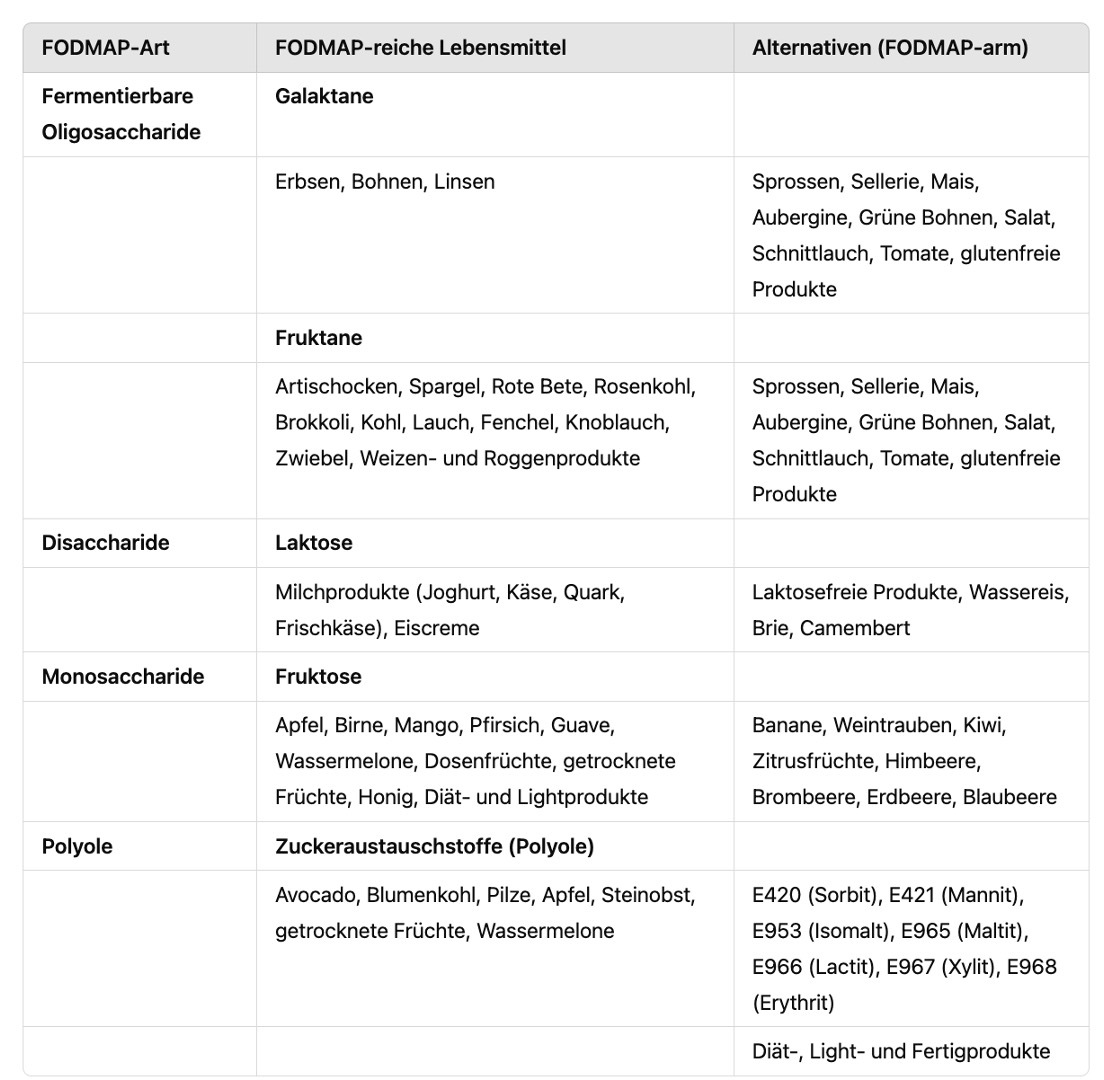
FODMAP-containing foods and alternatives
Explanation of the categories:
- Fermentable oligosaccharides: this category includes galactans and fructans, which are found in many legumes (such as peas, beans, lentils) and certain vegetables (such as artichokes, leeks, garlic, broccoli).Disaccharides (lactose): Lactose is found in milk and dairy products such as yogurt, cheese and ice cream. Lactose-free alternatives are the best options here.Monosaccharides (fructose): These include fructose-rich fruits such as apples, pears, mango and also honey. Low-fructose alternatives such as bananas and citrus fruits are recommended.Polyols (sugar substitutes): Polyols are sugar alcohols that are often found in diet products and sugar-free foods. They can cause digestive problems, so foods such as avocado, mushrooms and dried fruit should be avoided.
Usage:
- FODMAP-rich foods should be avoided or greatly reduced in dietary changes.Low FODMAP foods offer healthy and tolerable alternatives to minimize digestive discomfort.
Tip: If you are following a low FODMAP diet, it is advisable to test the foods in small quantities first in order to identify individual intolerances.
What makes the FODMAP concept unique?
In contrast to other nutritional approaches, such as vegetarian diets, alkaline diets or specific nutritional guidelines such as food combining and the Atkins diet, the FODMAP concept is fundamentally different. It was not developed on the basis of natural philosophical, anthropological or alternative medical considerations. Instead, it is based on the knowledge gained from the successful treatment of irritable bowel syndrome patients with dietary fiber and patients with carbohydrate intolerances such as lactose intolerance and fructose malabsorption. The concept synthesizes these experiences into a broader hypothesis related to the fermentation of certain chemically defined sugars and sugar alcohols.
What effects do FODMAPs have in the human organism?
The polysaccharides fructooligosaccharides (FOS) and galactooligosaccharides (GOS), which consist of less than 10 sugar molecules, as well as the inulin found in some prebiotic yogurts and the fructans (long carbohydrates with more than 10 fructose molecules) found in many foods, are not absorbed as efficiently in the human intestine as, for example, glucose. Instead, they reach deeper sections of the intestine, namely the lower part of the small intestine and the right-sided large intestine. There they are subject to the action of intestinal bacteria and are metabolized into gases such as hydrogen, carbon dioxide and methane as well as short-chain fatty acids such as acetate, propionate and butyrate.
A similar process occurs when lactose cannot be broken down and absorbed due to lactase deficiency (lactose intolerance), or when fructose is consumed in quantities that exceed the absorption capacity of the human intestine (fructose malabsorption). Sugar alcohols and artificial sweeteners such as sorbitol and mannitol, which are contained in "sugar-free" chewing gum, sweets and soft drinks, are also fermented by intestinal bacteria in a similar way.
Fructose, FOS and fructans are osmotically active substances, which means that they draw water into the intestinal lumen, stimulate peristalsis and can lead to watery stools or diarrhea. GOS and polyols (sugar alcohols) lead to increased gas formation, which can lead to increased flatulence and wind.
How does the FODMAP diet work?
The diet consists of three phases:
1.Elimination phase: in this phase, high FODMAP-containing foods are removed from the diet for a certain period of time in order to identify possible triggers of the symptoms.
2.Reintroduction phase: After the elimination phase, the FODMAP foods are gradually reintroduced into the diet to see which of them cause specific symptoms.
3.Individualization phase: Based on the results of the reintroduction phase, a personalized dietary strategy is created that minimizes the individual trigger foods.
Who benefits from the FODMAP diet?
The FODMAP diet is particularly suitable for people with irritable bowel syndrome (IBS) who suffer from symptoms such as bloating, abdominal pain, diarrhea or constipation.
Conclusion: The FODMAP diet can be an effective method for relieving IBS symptoms. Contact us for your personal consultation. Your health is important to us.