
Effective treatment of varicose veins (esophageal varices) in the esophagus.
What is esophageal variceal ligation and why is it used? Oesophageal variceal ligation is a medical procedure that aims to stop bleeding from dilated veins in the oesophagus (oesophageal varices). These varicose veins can occur in liver diseases, especially cirrhosis, and can lead to dangerous bleeding.
How does oesophageal variceal ligation work?
Diagnosis: Endoscopic examinations are used to determine the presence of esophageal varicesand placement of the rubber bands: An endoscope is inserted and rubber bands are placed around the dilated veins in the esophagus. blood flow interruption: The rubber bands lead to an interruption of the blood flow in the varices, which significantly reduces the risk of bleeding. Repeated sessions: Depending on the need, multiple sessions may be required to treat the varices.
Advantages of esophageal variceal ligation:
Bleeding prevention: reduces the risk of dangerous bleeding from oesophageal varices Minimally invasive: the procedure is performed endoscopically without open surgery Effectiveness: ligation is a proven method for long-term control of oesophageal varices.
Is oesophageal variceal ligation suitable for you? The decision to undergo esophageal variceal ligation should be made on an individual basis. Your doctor will assess your specific situation and discuss the best options for your health.
Conclusion: Esophageal variceal ligation is an effective method of preventing dangerous bleeding in patients with liver disease. If you would like to find out more or would like an individual consultation, we are at your disposal. Our experienced team will accompany you on the way to effective and safe treatment.
about the author: Dr. Stefan Schlosser is a specialist in gastroenterology and general internal medicine and holds a master's degree in health economics. With over 20 years of professional experience, he has a wealth of clinical and scientific experience. He specializes in interventional minimally invasive endoscopy, functional diagnostics and endobariology. Dr. Schlosser is a course leader for the SGUM in ultrasound training for young doctors and is a member of the Swiss, European and American Society of Gastroenterology (SGG, ESGE, ASGE). He works in an SIWF-recognized outpatient training center in Bern.
Wann ist eine Ösophagusvarizen-Ligatur sinnvoll?
Nicht alle Ösophagusvarizen müssen unmittelbar endoskopisch behandelt werden.
Die Indikation hängt insbesondere von Grösse und Blutungsrisiko der Varizen, der Leberfunktion sowie bestehenden Begleiterkrankungen ab.
Primärprophylaxe: Erste Varizenblutung verhindern
Bei Patienten mit erhöhtem Blutungsrisiko ist eine vorbeugende Behandlung sinnvoll.
Bei geeigneten Patienten werden hierfür häufig nichtselektive Betablocker, insbesondere Carvedilol, bevorzugt.
Wenn diese Medikamente nicht vertragen werden oder kontraindiziert sind, kann eine endoskopische Gummibandligatur angezeigt sein.
Sekundärprophylaxe: Erneute Blutung verhindern
Nach einer überstandenen Ösophagusvarizenblutung ist das Risiko einer erneuten Blutung erhöht.
Zur langfristigen Vorbeugung wird in der Regel eine Kombination aus wiederholter endoskopischer Varizenligatur und einem nichtselektiven Betablocker eingesetzt.
Akute Ösophagusvarizenblutung
Bei einer aktiven Varizenblutung ist die endoskopische Bandligatur ein etabliertes Verfahren zur Blutstillung.
Die Behandlung muss im Rahmen einer notfallmässigen, spitalgebundenen Versorgung erfolgen.
Sie wird abhängig vom Schweregrad mit Kreislaufstabilisierung, vasoaktiven Medikamenten, Antibiotikaprophylaxe und weiteren Massnahmen kombiniert.
Wie funktioniert die Gummibandligatur der Speiseröhre?
Die Behandlung erfolgt mit einem flexiblen Gastroskop, an dessen Spitze ein spezieller Ligaturaufsatz befestigt wird.
Über das Endoskop können die erweiterten Venen gezielt dargestellt und behandelt werden.
Platzierung der Gummibänder
Der zu behandelnde Varizenabschnitt wird vorsichtig in den Ligaturaufsatz eingesaugt.
Anschliessend wird ein elastischer Gummiring über das erfasste Gewebe freigesetzt.
Dadurch wird der abgebundene Gewebeanteil von der Blutversorgung abgeschnitten.
Was geschieht nach der Ligatur?
Das behandelte Gewebe bildet sich zurück und wird im weiteren Verlauf abgestossen.
An der Behandlungsstelle entsteht zunächst eine oberflächliche Schleimhautulzeration, die anschliessend abheilt und vernarbt.
Durch wiederholte Behandlung können die Ösophagusvarizen schrittweise beseitigt werden.
Werden mehrere Gummibänder gesetzt?
Je nach Anzahl, Grösse und Verteilung der Varizen können während einer Untersuchung mehrere Gummibänder platziert werden.
Häufig sind mehrere Sitzungen notwendig.
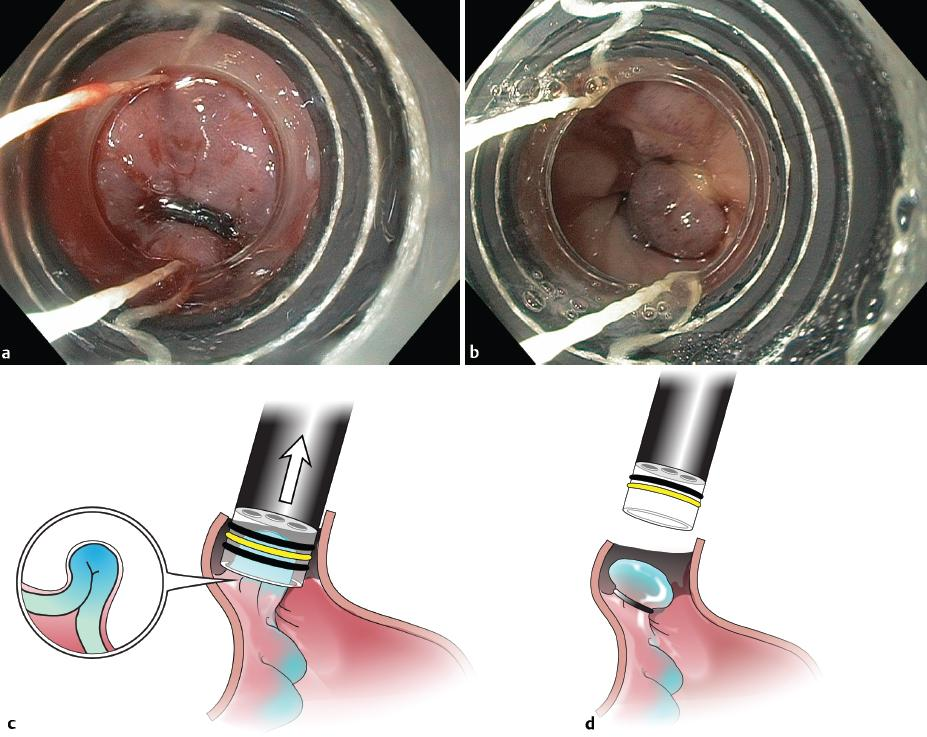
Endoskopische Gummibandligatur von Ösophagusvarizen bei portaler Hypertension
Wie läuft eine geplante Ösophagusvarizen-Ligatur bei Vivomed in Bern ab?
1. Hepatologische Beurteilung
Vor der geplanten Behandlung beurteilen wir die zugrunde liegende Lebererkrankung, die bisherigen Endoskopiebefunde, die Leberfunktion und mögliche Begleiterkrankungen.
Wichtig sind auch Medikamente, insbesondere Betablocker und gerinnungshemmende Arzneimittel.
2. Vorbereitung
Für die Gastroskopie müssen Sie nüchtern sein.
Die genauen Anweisungen zur Nahrungsaufnahme, Medikamenteneinnahme und Anreise erhalten Sie vor dem Termin.
3. Endoskopische Untersuchung
Das Gastroskop wird über den Mund in die Speiseröhre eingeführt.
Die Varizen werden beurteilt und bei entsprechender Indikation mit Gummibändern behandelt.
4. Sedierung
Die Behandlung erfolgt in der Regel unter einer individuell angepassten Sedierung.
Währenddessen werden die relevanten Vitalfunktionen überwacht.
5. Nachbeobachtung
Nach dem Eingriff erfolgt eine medizinische Überwachung.
Das weitere Vorgehen und die Entlassung richten sich nach dem individuellen Risiko und dem Behandlungsverlauf.
Bei Patienten mit ausgeprägter Lebererkrankung kann eine stationäre Behandlung erforderlich sein.
Wie viele Varizenligaturen sind notwendig?
Bei ausgeprägten Ösophagusvarizen sind häufig mehrere Behandlungssitzungen notwendig.
Das Ziel ist eine möglichst vollständige endoskopische Eradikation der behandlungsbedürftigen Varizen.
Intervalle bei der Primärprophylaxe
Wenn eine endoskopische Primärprophylaxe angezeigt ist, wird die Bandligatur entsprechend den aktuellen Empfehlungen häufig im Abstand von zwei bis vier Wochen wiederholt.
Intervalle nach einer Varizenblutung
Nach einer durchgemachten Varizenblutung werden die weiteren Ligaturen üblicherweise in Intervallen von einer bis vier Wochen durchgeführt, bis die Varizen eradiziert sind.
Nachkontrollen
Auch nach erfolgreicher Eradikation können Ösophagusvarizen erneut auftreten.
Deshalb bleiben regelmässige gastroskopische Kontrollen erforderlich.
Die Intervalle richten sich nach der Indikation, dem Blutungsrisiko und der zugrunde liegenden Lebererkrankung.
Ist die Lebererkrankung damit behandelt?
Nein. Die Varizenligatur behandelt die erweiterten Venen und reduziert deren Blutungsrisiko.
Die zugrunde liegende portale Hypertension und Lebererkrankung müssen weiterhin gezielt behandelt und überwacht werden.
Varizenligatur oder Carvedilol: Welche Behandlung ist besser?
Zur Vorbeugung von Ösophagusvarizenblutungen stehen endoskopische und medikamentöse Verfahren zur Verfügung.
Nichtselektive Betablocker
Medikamente wie Carvedilol oder Propranolol senken den Druck im Pfortadersystem beziehungsweise reduzieren den portalen Bluteinstrom.
Sie können dadurch das Risiko varizenbedingter Blutungen vermindern.
Bei geeigneten Patienten mit klinisch signifikanter portaler Hypertension werden nichtselektive Betablocker häufig bevorzugt.
Wann ist eine Ligatur sinnvoller?
Wenn Betablocker kontraindiziert sind oder nicht vertragen werden, ist bei blutungsgefährdeten Ösophagusvarizen eine endoskopische Ligatur eine etablierte Alternative.
Kombination nach früherer Blutung
Nach einer stattgefundenen Varizenblutung wird zur Sekundärprophylaxe normalerweise eine Kombination aus Betablocker und wiederholter Varizenligatur empfohlen.
Wann ist ein TIPS notwendig?
Bei bestimmten Hochrisikosituationen oder wiederkehrenden Blutungen kann ein transjugulärer intrahepatischer portosystemischer Shunt (TIPS) erforderlich sein.
Hierbei wird interventionell eine Verbindung zur Druckentlastung des Pfortadersystems geschaffen.
Die Entscheidung erfolgt in einem entsprechend spezialisierten Spitalzentrum.
Welche Risiken hat eine Ösophagusvarizen-Ligatur?
Die endoskopische Bandligatur ist ein etabliertes Verfahren mit hoher Wirksamkeit bei geeigneten Ösophagusvarizen.
Wie bei jedem invasiven Eingriff können jedoch Komplikationen auftreten.
Schmerzen und Schluckbeschwerden
Nach der Ligatur können vorübergehend Druckgefühl, Schmerzen hinter dem Brustbein oder Beschwerden beim Schlucken auftreten.
Schleimhautulzerationen
An den Ligaturstellen entstehen nach dem Abstossen des behandelten Gewebes oberflächliche Geschwüre.
Diese heilen normalerweise im weiteren Verlauf ab.
Nachblutungen
Selten kann es zu einer Blutung aus einem Ligaturulkus kommen.
Bei zugrunde liegender Leberzirrhose können Blutungen besonders schwerwiegend sein.
Weitere seltene Komplikationen
- Ausgeprägte Schluckbeschwerden
- Vorübergehende Nahrungspassagestörungen
- Selten narbige Ösophagusstenosen
- Aspiration von Mageninhalt
- Komplikationen der Sedierung
- Sehr selten Verletzungen der Speiseröhre
Wann muss sofort ärztliche Hilfe gesucht werden?
Bei Bluterbrechen, Teerstuhl, starken Brust- oder Oberbauchschmerzen, Kreislaufbeschwerden, Fieber oder ausgeprägten Schluckstörungen ist eine unverzügliche medizinische Abklärung notwendig.
Bei Verdacht auf eine akute Varizenblutung muss sofort die Notrufnummer 144 gewählt werden.
Was muss ich nach einer Ösophagusvarizen-Ligatur beachten?
Nach dem Eingriff erhalten Sie individuelle Hinweise zu Ernährung, Medikamenteneinnahme und weiteren Kontrollterminen.
Essen und Trinken
Nach der Behandlung kann vorübergehend ein angepasster Kostaufbau sinnvoll sein.
Je nach Befund werden zunächst Flüssigkeiten und anschliessend weiche Speisen empfohlen.
Der Zeitpunkt des Ernährungsbeginns und die notwendige Dauer einer Kostanpassung werden individuell festgelegt.
Medikamente
Eine bestehende Behandlung mit nichtselektiven Betablockern sollte nicht eigenmächtig verändert oder abgesetzt werden.
Falls erforderlich, können vorübergehend zusätzliche Medikamente zur Behandlung von Schleimhautbeschwerden verordnet werden.
Nach einer Sedierung
Nach einer Untersuchung unter Sedierung dürfen Sie während des vorgegebenen Zeitraums nicht selbst ein Fahrzeug führen.
Bitte beachten Sie die organisatorischen Hinweise unserer Praxis.
Kontrollgastroskopie
Da häufig mehrere Behandlungssitzungen notwendig sind, wird die nächste Kontrolle abhängig vom Befund geplant.
Auch nach erfolgreicher Behandlung bleibt eine langfristige Überwachung wichtig.
Was ist der Unterschied zwischen Ösophagusvarizen und Magenvarizen?
Bei portaler Hypertension können Krampfadern sowohl in der Speiseröhre als auch im Magen entstehen.
Ösophagusvarizen
Ösophagusvarizen befinden sich in der Speiseröhre.
Die endoskopische Gummibandligatur ist ein etabliertes Verfahren zur Behandlung geeigneter Ösophagusvarizen.
Magenvarizen
Magenvarizen liegen im Bereich des Magens und unterscheiden sich hinsichtlich Anatomie und Blutungsrisiko von Ösophagusvarizen.
Bei bestimmten Magenvarizen werden andere endoskopische oder interventionelle Verfahren eingesetzt.
Hierzu gehören beispielsweise die Behandlung mit Gewebekleber, ausgewählte endosonographisch gesteuerte Verfahren sowie in bestimmten Situationen TIPS oder weitere radiologische Interventionen.
Eine Gummibandligatur ist deshalb nicht für alle Formen von Magenvarizen die geeignete Behandlung.
FAQ questions: Colorectal cancer screening and bowel screening.
Who carries out the screening?
Colonoscopy can be carried out on an outpatient basis in a gastrointestinal practice in almost all cases. A colonoscopy may only be performed by doctors who have completed special training for this examination. To ensure good quality, gastroenterologists must prove that they have performed a specified minimum number of colonoscopies per year. There are also special hygiene regulations and quality standards for practices and clinics that carry out colonoscopies, compliance with which is monitored.
Who carries out the screening?
Colonoscopy can be carried out on an outpatient basis in a gastrointestinal practice in almost all cases. A colonoscopy may only be performed by doctors who have completed special training for this examination. To ensure good quality, gastroenterologists must prove that they have performed a specified minimum number of colonoscopies per year. There are also special hygiene regulations and quality standards for practices and clinics that carry out colonoscopies, compliance with which is monitored.
Who carries out the screening?
Colonoscopy can be carried out on an outpatient basis in a gastrointestinal practice in almost all cases. A colonoscopy may only be performed by doctors who have completed special training for this examination. To ensure good quality, gastroenterologists must prove that they have performed a specified minimum number of colonoscopies per year. There are also special hygiene regulations and quality standards for practices and clinics that carry out colonoscopies, compliance with which is monitored.
Who carries out the screening?
Colonoscopy can be carried out on an outpatient basis in a gastrointestinal practice in almost all cases. A colonoscopy may only be performed by doctors who have completed special training for this examination. To ensure good quality, gastroenterologists must prove that they have performed a specified minimum number of colonoscopies per year. There are also special hygiene regulations and quality standards for practices and clinics that carry out colonoscopies, compliance with which is monitored.
Who carries out the screening?
Colonoscopy can be carried out on an outpatient basis in a gastrointestinal practice in almost all cases. A colonoscopy may only be performed by doctors who have completed special training for this examination. To ensure good quality, gastroenterologists must prove that they have performed a specified minimum number of colonoscopies per year. There are also special hygiene regulations and quality standards for practices and clinics that carry out colonoscopies, compliance with which is monitored.
Brauche ich regelmässige Darmspiegelungen?
Nicht bei jeder Kontrolle. Endoskopien werden zur Diagnosestellung, zur Beurteilung des Therapieerfolgs und bei langjährigem Dickdarmbefall zur Darmkrebsvorsorge eingesetzt. Das Intervall wird individuell festgelegt.
Kann man während derselben Endosonographie eine Biopsie entnehmen?
Ja. Wenn die medizinische Indikation besteht und die Punktion vorbereitet wurde, kann die Gewebeentnahme im Rahmen derselben Untersuchung erfolgen.
Müssen Blutverdünner vor der Biopsie abgesetzt werden?
Das hängt vom Medikament, dem Blutungsrisiko und der individuellen Situation ab. Gerinnungshemmende Medikamente dürfen nicht selbständig abgesetzt werden.
Ist EUS-FNB dasselbe wie eine Gastroskopie?
Nein. Bei der Endosonographie wird ein spezielles Endoskop mit Ultraschalltechnik eingesetzt, das auch tiefere Gewebeschichten und benachbarte Organe darstellen kann.
Wo kann ich eine EUS-FNB in Bern durchführen lassen?
Bei Vivomed – Gastroenterologie Bern bieten wir endosonographische Untersuchungen einschliesslich gezielter Feinnadelbiopsien und Feinnadelaspirationen bei geeigneter Indikation an.
Was ist bei Bluterbrechen zu tun?
<p>Bluterbrechen
bei bekannten
oder vermuteten
Ösophagusvarizen
ist ein
medizinischer Notfall.
Verständigen Sie
sofort den
Rettungsdienst unter 144.</p>
Wo kann ich Ösophagusvarizen in Bern behandeln lassen?
Bei Vivomed – Gastroenterologie Bern bieten wir eine spezialisierte hepatologische Beurteilung und geplante endoskopische Varizenbehandlung bei geeigneter Indikation an.

Ösophagusvarizen und Leberzirrhose: Spezialsprechstunde bei Vivomed Bern
Bei Ihnen wurden Ösophagusvarizen, eine Leberzirrhose oder eine portale Hypertension festgestellt?
Bei Vivomed – Gastroenterologie Bern bieten wir eine spezialisierte hepatologische Beurteilung, diagnostische Gastroskopien und geplante endoskopische Varizenbehandlungen an.
Wir prüfen, ob eine medikamentöse Therapie, eine endoskopische Ligatur oder eine andere Behandlungsstrategie angezeigt ist.
Die weitere Betreuung berücksichtigt auch die zugrunde liegende Lebererkrankung und die langfristige Blutungsprävention.
Kontakt und Terminvereinbarung
Vivomed – Gastroenterologie Bern
Waisenhausplatz 28
3011 Bern
Telefon: 031 333 32 36
E-Mail: vivomed@hin.ch
Kontakt und Terminvereinbarung
Hinweis: Bei Verdacht auf eine akute Varizenblutung keine reguläre Sprechstunde buchen, sondern sofort den Rettungsdienst unter 144 verständigen.
Über den medizinischen Autor
Dr. med. Stefan H. Schlosser, MBA, FEBGH
Facharzt FMH für Gastroenterologie und Allgemeine Innere Medizin
Dr. med. Stefan H. Schlosser ist Gastroenterologe und Leiter von Vivomed – Gastroenterologie Bern.
Zu seinen klinischen Schwerpunkten gehören die diagnostische und interventionelle Endoskopie, Lebererkrankungen und die spezialisierte hepatologische Funktionsdiagnostik.
Bei Vivomed werden endoskopische Behandlungsmethoden mit einer individuellen Beurteilung der zugrunde liegenden Erkrankung verbunden.
Medizinisch aktualisiert: Oktober 2026
Wissenschaftliche Grundlagen
- Gralnek IM et al. Endoscopic diagnosis and management of esophagogastric variceal hemorrhage: ESGE Guideline. Endoscopy. 2022;54:1094-1120. ESGE-Leitlinie zur Varizenblutung
- de Franchis R et al. Baveno VII – Renewing consensus in portal hypertension. Journal of Hepatology. 2022;76:959-974. Baveno-VII-Konsensus
Die Informationen dienen der allgemeinen medizinischen Aufklärung und ersetzen keine individuelle ärztliche Beurteilung.
Bei akuter gastrointestinaler Blutung ist eine sofortige notfallmedizinische Behandlung erforderlich.